Micro SaaS: Meaning, Ideas, Examples & How to Build One in 2026
- 1 Micro SaaS: Meaning, Ideas, Examples & How to Build One in 2026
- 1.1 Key Takeaways
- 1.2 What Is Micro SaaS? The Meaning in Plain English
- 1.3 Why Micro SaaS Is Important
- 1.4 Why Businesses Want Micro SaaS
- 1.5 The Numbers Behind Micro SaaS in 2026
- 1.6 Types of Micro SaaS We Build for Businesses
- 1.7 Best Micro SaaS Ideas and Niches for 2026
- 1.8 Micro SaaS Business Ideas by Industry
- 1.9 How to Validate a Micro SaaS Idea Before You Build
- 1.10 How to Build a Micro SaaS: Tools, Cost, and Timeline
- 1.11 Micro SaaS and AI: Where It Helps and Where It Doesn't
- 1.12 Micro SaaS Business Models: How These Companies Make Money
- 1.13 Micro SaaS Pricing, Customers, and Keeping Them
- 1.14 Micro SaaS Metrics to Track From Day One
- 1.15 Common Micro SaaS Mistakes (and How to Avoid Them)
- 1.16 Micro SaaS Launch Checklist for New Startups
- 1.17 Frequently Asked Questions About Micro SaaS
- 1.18 Related Reading from Inno Panda
- 1.19 Final Thoughts: Start Small on Purpose
Thinking about building a small software business but not sure where to start? This guide explains what Micro SaaS really means, which ideas are worth your time, and what it honestly takes to launch one. You'll get real numbers, plain examples from products we run ourselves, and straight talk about the risks, without the hype.
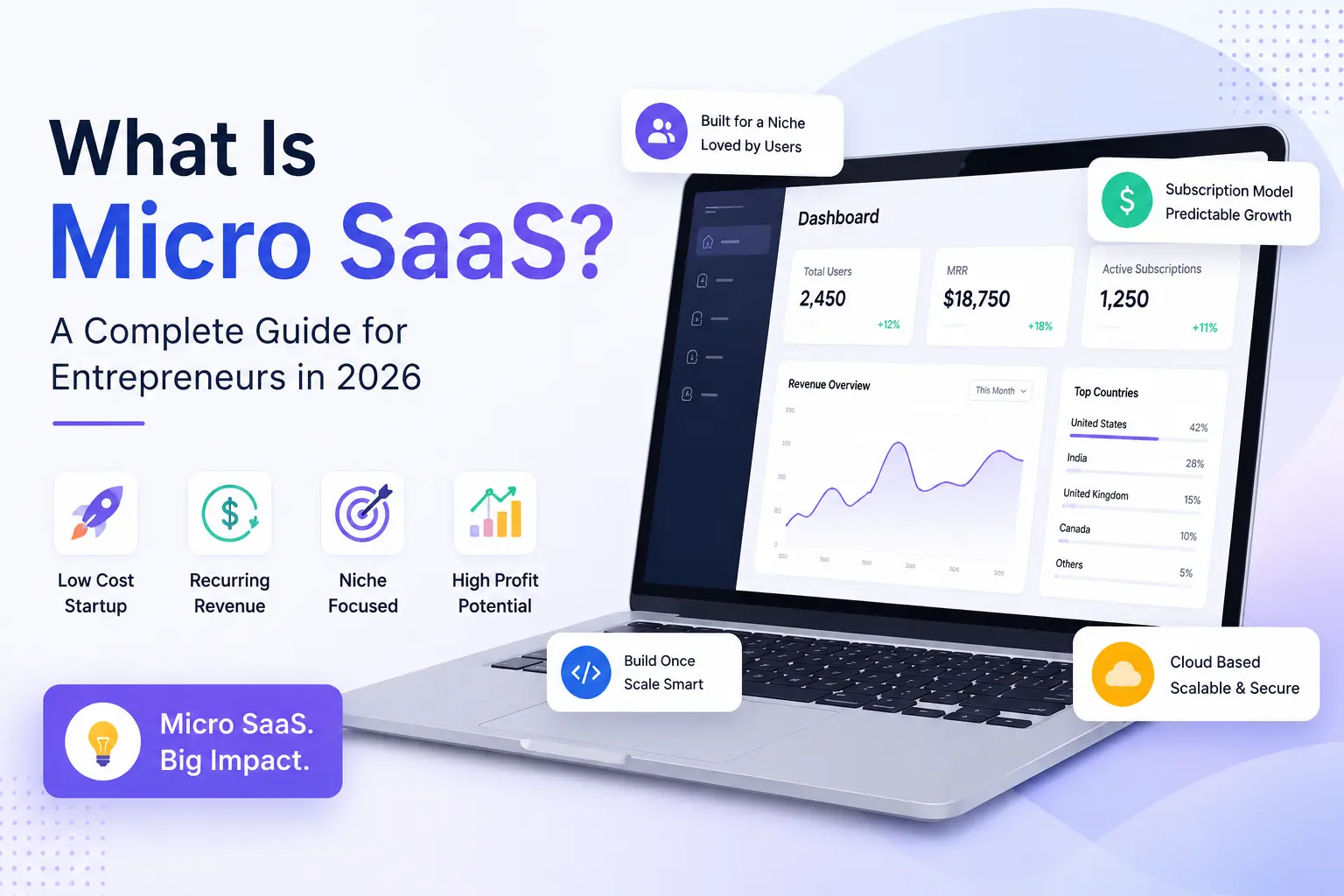
Quick answer: Micro SaaS is a small subscription software product that solves one specific problem for one niche audience. A solo founder or a team of two or three usually runs it. Many reach profit with 100 to 200 customers and need no outside funding.
Most software startups need a big team and a big cheque. Micro SaaS needs neither, and that's why so many solo founders are quietly building real income from it.
If that sounds too tidy, fair enough. We build software for a living, and we run two Micro SaaS products of our own. So this guide covers the good parts and the awkward ones: what Micro SaaS means, where ideas come from, how to test them, what it costs, and when you should walk away.
Key Takeaways
- Micro SaaS means a narrow scope, not a small ambition.
- Businesses like Micro SaaS because it costs less, starts faster, and fits their workflow.
- 150 customers paying $39 a month is $5,850 in monthly revenue.
- Validate before you build. Ten conversations and one pre-sale beat months of guessing.
- A focused MVP takes 6 to 14 weeks and typically costs $8,000 to $35,000.
- Churn and distribution stall more products than bad ideas do.
- Track five numbers from day one: MRR, churn, CAC, lifetime value, and activation.
- Use AI to remove one slow step, not as a selling point.
What Is Micro SaaS? The Meaning in Plain English
Picture a Swiss Army knife next to a really good bottle opener. Traditional software tries to be the knife. A Micro SaaS is the bottle opener. It does one job so well that people who need it don't go looking elsewhere.
The "micro" is about scope. You serve a clearly defined group, fix one painful problem, and earn recurring revenue from subscriptions. Because your costs stay low, you don't need thousands of customers to make it work.
Micro SaaS vs. SaaS: What's Different?
SaaS is the big category: any software you rent by subscription. Micro SaaS is a small, focused slice of it. The biggest differences are team size, funding, and how much revenue counts as a win.
| Factor | Micro SaaS | Traditional SaaS |
|---|---|---|
| Team size | 1 to 3 people | 5 to 500+ people |
| Funding | Paid for by revenue | Often VC or angel funded |
| Market | One narrow niche | Broad market or whole industry |
| Profit target | $2K-$50K MRR is a real business | $1M+ ARR usually needed |
| Time to profit | 6-18 months | Often 3-7+ years |
Micro SaaS vs. Vertical SaaS vs. a Side Project
Vertical SaaS serves a whole industry with many features, like complete software for dental clinics. A Micro SaaS handles one task inside that world, like appointment reminders. A side project is different again: it has no pricing, no support, and no promises. A Micro SaaS has paying customers who expect it to work next month too.
Why Micro SaaS Is Important
Micro SaaS matters because it changes two things at once: who gets to build software, and who gets software that actually fits.
It Gives Founders a Realistic Way In
Not long ago, starting a software company meant raising money and hiring a team before you had a single customer. Micro SaaS flips that. You can start with a small budget, a narrow problem, and a handful of paying users. You own the business, and the subscription income is yours to reinvest or keep.
It Serves Markets Big Vendors Ignore
Large software companies chase large markets. A small tutoring centre, a family-run clinic, or a ten-person logistics team rarely gets software built around its day. Micro SaaS fills that gap. When a tool is made for one kind of customer, it can skip the generic features and get the details right.
It Keeps Software Specialised and Competitive
Focused tools raise the bar for everyone. Bigger platforms have to keep improving the same features, and customers get more choice. Many Micro SaaS products also plug into platforms people already use, which makes those platforms more useful without bloating them.
Why Businesses Want Micro SaaS
Look at it from the buyer's side. A business owner rarely wakes up wanting new software. They want one annoying task to go away. Micro SaaS promises exactly that, without the baggage of a big platform.
They Pay for One Job, Not a Whole Suite
An all-in-one platform often means a long contract and a price built for large teams. A Micro SaaS usually charges a simple monthly fee, typically somewhere between $19 and $199 for the tools in our ideas list. For a small business, that's a much easier yes.
They Can Start Within Days
A focused tool has fewer settings and less to learn. A small team can often sign up, import their data, and see value in an afternoon instead of sitting through weeks of onboarding.
It Fits the Way They Already Work
Generic software makes you adapt to it. A niche tool is built around your workflow, your jargon, and your regular headaches. That is a big reason niche products keep customers once they're set up.
They Get Closer Support
With a small team behind the product, a customer can often reach the person who built it. Feedback turns into features faster, and problems get fixed without a ticket queue.
Why Some Businesses Build Their Own
Some companies go one step further and commission a Micro SaaS. The reasons are usually one of two. They want to fix an internal workflow that no off-the-shelf tool handles. Or they want to turn expertise into a new subscription revenue line. Both are good fits for a small, well-scoped build.
The Numbers Behind Micro SaaS in 2026
Building and running software costs far less than it used to. Managed hosting, billing, and sign-in tools now do most of the heavy lifting. Buyers also want tools made for their exact job. They don't want a giant platform with 90 features they'll never open.
The Simple Math Behind Micro SaaS
Here's a made-up example to make the numbers real. Say you build a booking tool for yoga studios and charge $39 a month. With 150 studios, that's $5,850 a month. Your hosting and tools might cost a few hundred dollars of that. The rest is yours to pay a developer, run ads, or take home.
Lifetime value is roughly your monthly price divided by your monthly churn.
At $39 and 5% churn, each customer is worth about $780. Cut churn to 3% and the same customer is worth $1,300. It also means you'd lose about eight of those 150 studios every month and have to replace them just to stand still. That's why retention matters more than most new founders expect.
This is an illustration, not a forecast. Your price and churn will differ.
Micro SaaS Trends to Watch in 2026
Four patterns keep showing up in the projects we see. Vertical AI tools handle one step of one profession's workflow. Add-ons for big platforms like Shopify reach merchants who already pay for software. Compliance and reporting trackers help small businesses keep up with new rules. And mobile companions fix desktop-first tools that never got a good phone app.
Types of Micro SaaS We Build for Businesses
We don't only build Micro SaaS for other people. We run our own too. ReKloq tracks employee time. SyncingAbout manages inventory and orders across sales channels. Our SaaS development team also builds products like these for businesses. Here are the six types we get asked about most, with a real Micro SaaS example where we have one.
1. Workforce and Time Tracking
The problem: teams lose hours to messy timesheets and guesswork. The product: one simple tool for logging time and seeing where it goes. ReKloq is our own example. It suits agencies, service teams, and any business that bills or plans by the hour.
2. Inventory and Order Management
The problem: selling on several channels means stock counts drift out of sync. The product: a tool that keeps inventory and orders aligned in one place. SyncingAbout is our own example. It suits multi-channel sellers who are tired of overselling.
3. AI Assistants and Automation
The problem: one repetitive task eats a team's week, such as answering the same support questions. The product: a small AI-powered tool that handles that one task well. It suits eCommerce, SaaS, and service businesses. Our AI automation integration work often sits behind these builds.
4. Analytics Dashboards
The problem: store owners drown in data and still can't answer simple questions. The product: a focused dashboard for one source, such as a Shopify or WooCommerce store, that turns numbers into clear next steps.
5. Niche Booking Systems
The problem: generic calendars don't understand how a clinic, salon, or tutor really schedules. The product: booking software with the reminders, rules, and payments that one profession needs.
6. Shopify Micro SaaS Apps
The problem: a big platform lacks one feature a group of merchants keeps asking for. The product: an add-on that fills that gap for an audience that already pays for apps.
What We Tell Every Founder
Every extra feature is something you have to support forever. So keep the first version boring and tight, and let paying customers tell you what to add. The Micro SaaS products that last usually do one thing people already do every week.
Best Micro SaaS Ideas and Niches for 2026
Good Micro SaaS ideas start with a real niche, not with AI. The ideas below pair a clear audience with a task they already pay to get done. Treat them as places to explore, then test each one using the next section.
| Idea | Who it's for | Typical pricing |
|---|---|---|
| AI content optimisation tool | Content marketers, SEO agencies | $39-$99/month |
| Local SEO monitoring | SMEs, digital agencies | $49-$149/month |
| Industry-specific booking system | Clinics, salons, tutors | $29-$99/month |
| AI customer support assistant | eCommerce, SaaS, service firms | $49-$199/month |
| eCommerce analytics dashboard | Shopify, WooCommerce owners | $29-$89/month |
| Compliance and reporting tracker | SMEs facing ESG or privacy rules | $59-$199/month |
| Mobile companion app | Field teams on CRM or ops tools | $19-$59/user/month |
Pricing ranges are typical market ranges, not guarantees.
Where to Find Micro SaaS Ideas on Reddit and Beyond
Go where your niche complains. Search subreddits, forums, app-store reviews, and the help pages of tools people already pay for. If you keep seeing "I wish this could..." or "is there an app for...", you've found an idea worth testing.
Shopify Micro SaaS: A Great Gap With a Real Risk
Shopify merchants already pay for apps, so a focused add-on has a built-in audience. The catch is platform risk. If the platform changes its rules or adds your feature, your edge can vanish overnight. Keep your own customer relationships, and think about supporting a second platform later.
Micro SaaS Business Ideas by Industry
The best Micro SaaS business ideas come from industries with repeat tasks, small teams, and tight budgets. Use this Micro SaaS list to explore Micro SaaS niches you already know or can easily reach.
How to Pick From the List
Choose the industry where you have an edge. Maybe you worked in it, or you know where its buyers hang out. Then search Reddit for Micro SaaS threads and industry forums to see what people complain about. Complaints you can fix with one simple tool are your best leads.
A Note on Regulated Industries
Healthcare and finance can be great markets, but they come with stricter privacy rules. If you're new, start with admin tasks like reminders and scheduling. Leave clinical or financial records for later, once you have the right safeguards in place.
Micro SaaS Apps and Products People Already Pay For
Most Micro SaaS apps fall into three groups. Some save time, like automation and scheduling tools. Some save money, like cost trackers and billing helpers. And some reduce mistakes, like compliance checkers and inventory alerts. If your idea fits at least one group, it's easier to explain and easier to sell.
How to Validate a Micro SaaS Idea Before You Build
This is the step most people skip, and it's the cheapest one. A few weeks of validation can save you months of building something nobody pays for.
Two warning signs are worth knowing. If the problem only shows up once a year, people won't keep paying. And if you can't think of one or two places to find your buyers, growth will be painful no matter how good the product is.
How to Build a Micro SaaS: Tools, Cost, and Timeline
No-Code or Custom Code?
You don't need to code to start. Tools like Bubble, Softr, and Glide let you test an idea with real paying users. They struggle with complex logic, heavy AI features, and growth past a few hundred users. A common path is to validate on no-code, then rebuild once revenue justifies it.
A Simple Micro SaaS Tech Stack
You need six things: a web front end, a back end, a database, sign-in, billing, and hosting. Use managed services for sign-in, billing, and hosting. Stripe is a common choice for billing. That leaves your time for the one feature that sets your product apart.
Micro SaaS Development Cost and Timeline
A focused MVP covers login, the core feature, billing, and a basic dashboard. Here's what that typically looks like.
| Scope | Typical cost | Typical timeline |
|---|---|---|
| Focused MVP | $8,000-$25,000 | 6-10 weeks |
| MVP with AI features | $15,000-$35,000 | 8-14 weeks |
| Hosting and tools, year one | $200-$600/month | Ongoing |
Ranges assume a Southeast Asian development partner and a well-scoped MVP. Your quote depends on scope.
Cost-saving tip: build the MVP, not the finished platform. Launch with two pricing tiers instead of five, and add features only when paying customers ask twice.
Security and Privacy Basics
Even a tiny product holds customer data. Use HTTPS everywhere, never store plain-text passwords, collect only what you need, and keep backups. Serving customers in Europe or Singapore? Check local privacy rules, such as GDPR or PDPA, before you launch.
Micro SaaS and AI: Where It Helps and Where It Doesn't
AI helps a Micro SaaS when it removes one slow step, like sorting, summarising, or drafting. It hurts when it's added just to sound modern, with no clear job to do.
Where AI Earns Its Place
Good jobs for AI are narrow and repeatable. Think of tagging support tickets, drafting a first reply, summarising a long document, or flagging unusual numbers in a report. The customer can see the time saved right away.
Where AI Gets in the Way
AI can be wrong, and your customers will notice. It also costs money every time it runs. If your product needs perfect accuracy, such as legal or medical decisions, treat AI as a helper that suggests, never as the final answer.
Keep a Human in the Loop
Let users review and edit before anything is sent or saved. It builds trust, catches mistakes early, and gives you feedback to improve the product.
Watch the Running Costs
Unlike most software features, AI usually costs more the more it's used. Check your cost per customer before you set a price. If heavy users could eat your margin, consider usage limits or a usage-based tier.
Micro SaaS Business Models: How These Companies Make Money
A Micro SaaS company makes money from subscriptions, but the exact model changes who signs up and how fast you grow. Here are the main options.
| Model | How it works | Best for | Watch out for |
|---|---|---|---|
| Flat monthly fee | One price for everyone | Simple tools with one clear job | Heavy users cost you more than light users |
| Tiered plans | Two or three plans with different limits | Products with a mix of small and larger customers | Too many tiers confuse buyers |
| Per seat | Price per user | Team tools such as time tracking | Customers may share logins to save money |
| Usage-based | Pay for what you use | AI tools and data-heavy products | Revenue is harder to predict |
| Freemium | Free plan, paid upgrade | Products that spread by word of mouth | Free users still cost money to support |
Which Model Fits Your Product?
Ask one question: what makes a customer want more of your product? If it's more team members, price per seat. If it's more volume, price by usage. If it isn't clear, start with two simple tiers and learn from what people choose.
Micro SaaS Pricing, Customers, and Keeping Them
Micro SaaS Pricing: Keep It Simple
Start with two tiers. Price on the value you save, not on your costs. If your tool saves a team five hours a month, $49 is an easy yes. An annual plan with a small discount also helps cash flow and reduces churn.
Micro SaaS Marketing: Pick One or Two Channels
You can't be everywhere, so don't try. SEO is slow to start but compounds. Niche communities work if you're useful first and promotional second. Integration marketplaces put you where customers already shop for tools. And direct outreach is still the fastest route to your first 10 customers.
Keep Customers: Fix Churn Early
Help every new user reach a first win in their first week. Send a short onboarding email, ask people why they cancel, and fix the top reason before anything else.
When Micro SaaS Isn't the Right Move
Skip it if the market can't support even 100 customers. Skip it if you can't reach your buyers. Skip it if a free built-in feature already does the job. Honest answers here save you money.
Successful Micro SaaS Companies and Micro SaaS for Sale
Successful Micro SaaS startups share the same habits. They pick a narrow niche, keep churn low, and have one dependable way to find customers. Want to sell one day? Micro SaaS for sale listings are priced on recurring revenue, churn, and how little the founder must do. Clean code and good notes help.
Micro SaaS Metrics to Track From Day One
Track five numbers: monthly recurring revenue (MRR), churn, customer acquisition cost (CAC), lifetime value (LTV), and activation rate. Together they tell you if your Micro SaaS is healthy.
| Metric | What it tells you | Simple formula |
|---|---|---|
| MRR | Your predictable monthly income | Paying customers × monthly price |
| Churn | How many customers you lose | Customers who cancel ÷ customers at the start of the month |
| CAC | What it costs to win one customer | Sales and marketing spend ÷ new customers |
| LTV | What one customer is worth | Monthly price ÷ monthly churn |
| Activation rate | How many new users reach their first win | Users who reach the first win ÷ sign-ups |
A Simple Rule of Thumb
Many founders aim for a lifetime value of at least three times the cost of winning a customer. Treat that as a guide, not a law. If your numbers are far off, fix the cheapest problem first. That is usually activation or churn, not ad spend.
What Top Micro SaaS Companies Watch Closely
Top Micro SaaS companies tend to check these numbers every week and make decisions once a month. They don't chase every chart. They pick one number to improve at a time.
Common Micro SaaS Mistakes (and How to Avoid Them)
Micro SaaS Launch Checklist for New Startups
Most Micro SaaS startups don't fail on launch day. They fail in the weeks around it. Use this checklist to stay on track.
Before You Launch
Launch Week
Your First 90 Days
Frequently Asked Questions About Micro SaaS
What is the Micro SaaS meaning?
Micro SaaS is a small software product that solves one specific problem for one niche audience and charges a subscription. A solo founder or a team of two or three usually runs it, and it can be profitable without outside funding.
What is the difference between SaaS and Micro SaaS?
SaaS is the broad category of subscription software. Micro SaaS is a small, narrow slice of it: fewer features, a tiny team, a specific audience, and a profit target that doesn't depend on venture capital or thousands of customers.
Is Micro SaaS profitable?
It can be, but it isn't automatic. Narrow audiences are cheaper to reach, and many products reach profit in 6 to 12 months with 100 to 200 paying customers. Weak retention or no repeatable way to find customers is what usually stops them.
What are the best Micro SaaS ideas in 2026?
The best ideas pair one niche workflow with practical AI or fill a gap inside a tool people already pay for. Strong starting points are AI content tools, local SEO monitoring, niche booking systems, compliance trackers, store analytics, and Shopify add-ons.
What are some Micro SaaS examples?
Examples include an employee time tracker, a multi-channel inventory and order tool, a booking app for one profession, a Shopify analytics dashboard, and a compliance reporting tracker. Inno Panda builds and runs products like ReKloq and SyncingAbout.
How do I validate a Micro SaaS idea?
Talk to at least 10 people in your target niche, ask how they solve the problem today, and try to pre-sell before you build. If nobody will pay or join a paid waitlist, the idea needs rethinking.
How much does Micro SaaS development cost?
A well-scoped MVP typically costs $8,000 to $35,000, depending on feature complexity and whether AI is involved. Hosting and tools add roughly $200 to $600 a month in year one. Your own quote will vary with scope.
How long does it take to build a Micro SaaS MVP?
Most MVPs take 6 to 14 weeks. A simple subscription tool sits at the low end, while an AI product with a custom data pipeline takes longer.
Do I need to code to start a Micro SaaS?
No. No-code tools like Bubble, Softr, and Glide can validate demand first. Many founders move to custom code once paying customers justify it, especially when the product needs complex logic or AI features.
Where can I find Micro SaaS ideas on Reddit?
Search niche subreddits and forums for repeated complaints, such as "I wish this tool could..." or "is there an app for...". A problem that keeps coming up, and that people already pay to work around, is a strong idea candidate.
Can you buy or sell a Micro SaaS business?
Yes. Small SaaS products are bought and sold on acquisition marketplaces, usually valued on recurring revenue, churn, and how little the owner has to be involved. Clean code, documentation, and steady retention raise the price.
What are the biggest risks of a Micro SaaS?
The main risks are churn, a tiny market, depending on one platform such as Shopify, and having no repeatable way to find customers. Check each one before you build, not after launch.
What are the best Micro SaaS business ideas by industry?
Good ideas exist in healthcare admin, education, real estate, eCommerce, logistics, HR, finance, and marketing. Pick the industry you know best, then solve one repeat task, such as reminders, scheduling, tracking, or reporting.
How do Micro SaaS companies make money?
Most Micro SaaS companies earn recurring subscription revenue. Common models are flat monthly fees, tiered plans, per-seat pricing, usage-based pricing, and freemium with a paid upgrade.
What metrics should a Micro SaaS track?
Track monthly recurring revenue, churn, customer acquisition cost, lifetime value, and activation rate. Check them weekly and make decisions monthly. Fix churn and activation before spending more on ads.
Can I use AI in a Micro SaaS?
Yes, if AI removes one slow step, like sorting, summarising, or drafting. Keep a human in the loop, watch your running costs, and avoid using AI where a wrong answer could cause serious harm.
Final Thoughts: Start Small on Purpose
Micro SaaS rewards focus. Pick one problem, one audience, and one price. Validate before you build, then fix churn before you chase growth. Want a second opinion on your idea? Our team will give you an honest read on scope, timeline, and cost. No obligation.