SaaS Pricing in 2026: What It Really Costs Singapore Businesses to Run a SaaS Stack
- 1 SaaS Pricing in 2026: What It Really Costs Singapore Businesses to Run a SaaS Stack
- 1.1 Key Takeaways
- 1.2 What Is SaaS Pricing and How Does It Actually Work?
- 1.3 The Benefits of SaaS Over Traditional Software
- 1.4 What Different Types of SaaS Actually Cost: A Category-by-Category Comparison
- 1.5 Why SaaS Pricing Jumped in 2026: The AI Tier Problem
- 1.6 The Hidden Costs Behind Every SaaS Subscription
- 1.7 Total Cost of Ownership: SaaS vs What You Actually Pay Over Time
- 1.8 B2B SaaS Pricing vs Enterprise SaaS Pricing: What Changes at Scale
- 1.9 Budgeting for SaaS Costs in Singapore: Currency, GST, and Billing Cycles
- 1.10 Pricing Your Own SaaS Product: A Different Question Entirely
- 1.11 Auditing Your SaaS Pricing Page Before You Buy
- 1.12 Are You Overpaying? A Quick SaaS Cost Benchmark
- 1.13 Quick Glossary
- 1.14 Frequently Asked Questions About SaaS Pricing
- 1.15 Is Your SaaS Stack Actually Worth What You're Paying?
Chances are your business runs on ten or more SaaS tools right now, and chances are nobody has added up what they really cost. Between seats, hidden fees, and the new AI tiers vendors keep bolting on, the number is usually bigger than anyone expects. Here's the full picture, broken down category by category, in plain terms.
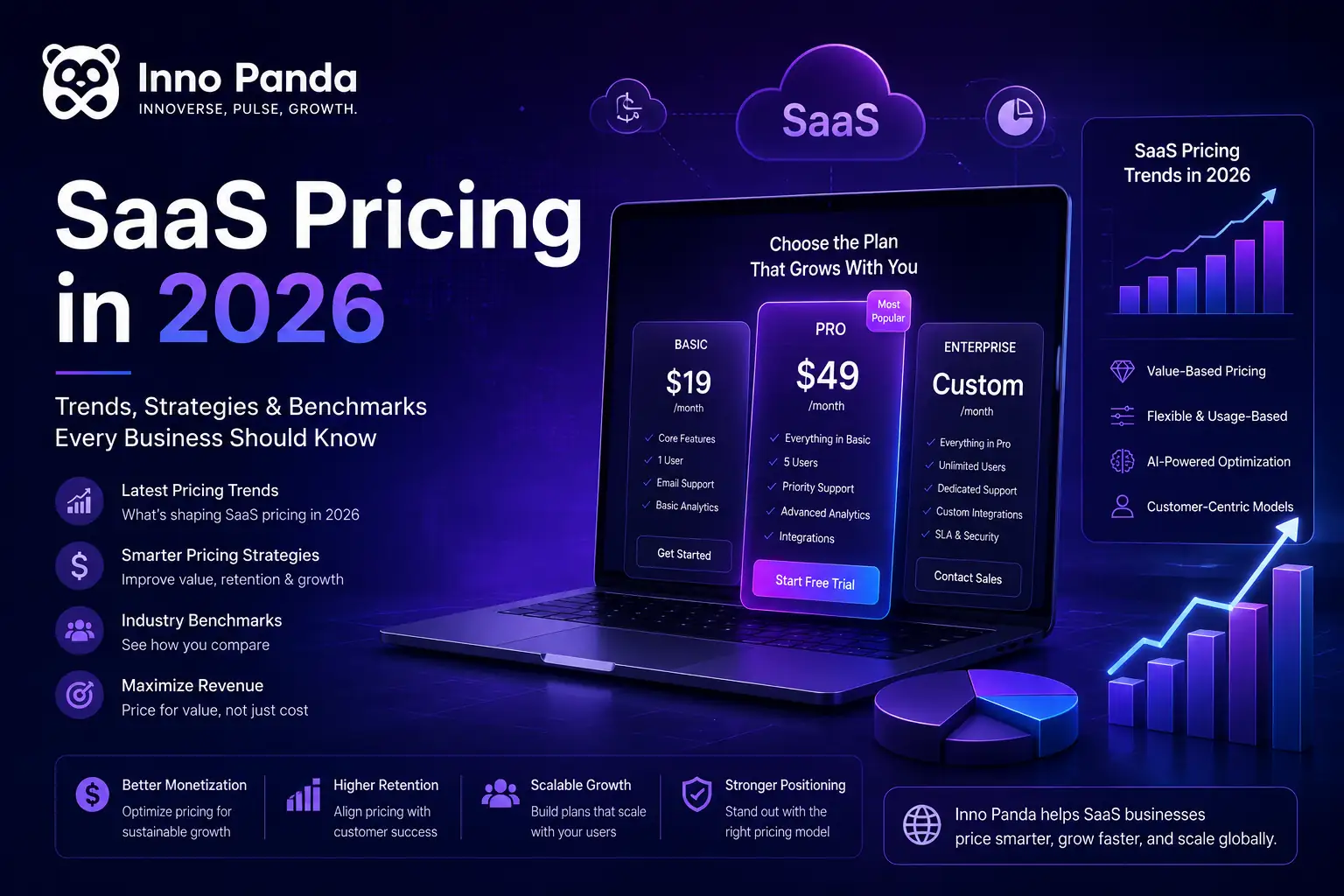
Key Takeaways
- SaaS pricing follows a handful of models, mainly per-user, usage-based, and flat-rate tiered, and the right one depends on the category of software.
- Cost varies hugely by category. CRM software can run $15 to $165 per user a month, while HR platforms are usually $6 to $24 per employee a month.
- 2026's biggest pricing shift is the AI tier. Many vendors now charge extra for AI features, pushing some mid-market bills up by 30 to 50 percent.
- The subscription fee is never the whole story. Onboarding, training, and admin overhead commonly add 20 to 40 percent on top.
- Per-seat pricing is starting to break down as AI agents take over work once done by human users, which is reshaping how vendors price their products.
- Paying annually instead of monthly usually saves 15 to 20 percent, but it locks you in, so it's worth weighing against how settled your team size is.
- If you're building a SaaS product yourself rather than buying one, the pricing question flips entirely, and it deserves its own section below.
What Is SaaS Pricing and How Does It Actually Work?
SaaS pricing is simply how a software vendor charges you for access to their product, usually a monthly or annual subscription. You are not buying the software outright. You are paying for ongoing access, and in return the vendor takes care of hosting, updates, and support, so you do not have to.
There are only a handful of pricing models out there once you strip away the marketing language. Knowing which one you are actually dealing with is the first step to figuring out whether you are getting a fair deal.
Common SaaS Pricing Models Explained
Strip away the marketing language and pricing comes down to a handful of models. Here is how they compare.
| Pricing Model | How It Charges You | Works Best For |
|---|---|---|
| Per-User (Seat) Pricing | A fee for every person given access to the product | CRMs, project management tools, other team software where value scales with headcount |
| Usage-Based Pricing | Charges based on actual activity, such as API calls, emails sent, or data processed | Infrastructure and API-driven products where usage varies a lot between customers |
| Flat-Rate Tiered Pricing | A set number of fixed-price packages with defined feature limits | Accounting software, ecommerce platforms, and other predictable-use tools |
Usage-Based vs Flat-Rate Pricing
These two models trade off predictability against fairness, and it is worth seeing the difference side by side before you commit to either.
| Factor | Usage-Based Pricing | Flat-Rate Pricing |
|---|---|---|
| Cost predictability | Low, a busy month can produce a surprising bill | High, the same cost every month regardless of activity |
| Fairness at low usage | High, you only pay for what you actually use | Low, you can end up paying for capacity you never touch |
| Risk as you scale | Cost can grow faster than expected | Cost stays flat until you outgrow the tier |
| Best fit | Businesses with variable or unpredictable activity | Businesses that want a fixed, easy-to-forecast bill |
Most growing businesses end up on a hybrid of the two anyway, a base subscription plus usage charges once they cross a threshold.
The Benefits of SaaS Over Traditional Software
Before we get into cost, it is worth remembering why SaaS became the default choice in the first place. It is not just about convenience. The economics genuinely work differently compared to owning software outright, and that difference is what made SaaS win.
What Different Types of SaaS Actually Cost: A Category-by-Category Comparison
This is the question most SaaS pricing guides skip. "SaaS costs money" is not useful. What you actually need to know is how much a CRM costs compared to an HR platform, or an accounting tool compared to an ecommerce platform, so you can tell whether your own bill looks normal.
| SaaS Category | Typical Pricing Model | Typical Cost Range | Example Tools |
|---|---|---|---|
| CRM | Per user, per month | $15-$165/user (up to $300+ enterprise) | HubSpot, Salesforce, Pipedrive |
| HR & Payroll (HRIS) | Per employee, per month | $6-$24/employee | BambooHR, Gusto |
| Project Management | Per user, per month | $8-$30/user | Asana, Monday.com |
| Marketing Automation | Tiered by contact list size | $20-$1,500+/month | ActiveCampaign, Marketo |
| Accounting & Finance | Flat monthly tier | $20-$90/month | Xero, QuickBooks |
| Communication & Collaboration | Per user, per month | $0-$25/user | Slack, Zoom |
| IT Service Management (ITSM) | Per agent, per month | $80-$120/agent | Zendesk, Jira Service Management |
| Identity & Access Security (IAM) | Per user, per month | $4-$15/user | Okta, Duo |
| Ecommerce Platform | Flat monthly tier | $39-$2,000+/month | Shopify |
CRM, HR, and Project Management Pricing Compared
These three categories are the most common SaaS spend for a growing business, and they price on very different logic.
| Category | What Pricing Scales With | Why It's Priced That Way |
|---|---|---|
| CRM | Active user seats | Most expensive per user since vendors bundle sales, marketing, and reporting features together |
| HR & Payroll | Total employee headcount | Usually cheaper per person since it is priced across the whole company, not just active users |
| Project Management | Active user seats | Cheap at entry level, climbs fast once you need advanced reporting or automation |
Where Marketing and Ecommerce SaaS Costs Diverge
These two categories break the usual per-user logic entirely, which catches a lot of businesses off guard.
| Category | What Pricing Scales With | What This Means for You |
|---|---|---|
| Marketing Automation | Size of your contact list | A small team with a large email list can pay more than a bigger team with a small one |
| Ecommerce Platform | Transaction volume and store features | Cost has nothing to do with headcount, which is why the price range is so wide |
Why SaaS Pricing Jumped in 2026: The AI Tier Problem
If your SaaS bill has climbed this year without your team growing, the AI tier is probably why. Vendors across almost every category have started layering paid AI features on top of their existing plans, and the price difference is not small.
Real example worth knowing: a mid-market business that previously paid around $50,000 a year for a CRM is now commonly seeing $75,000 to $90,000, purely because the AI-enabled tier costs more, not because the core product changed. This pattern is showing up across CRM, marketing, and support software alike.
Most vendors are not raising the price of their base plan. Instead, they are introducing a new top tier that bundles AI features, forecasting, automated summaries, AI agents, and pricing it well above the standard plan. Businesses that want the AI capability have to upgrade the whole tier, even if they only wanted one AI feature.
What This Means for Per-Seat Pricing Going Forward
Per-seat pricing assumes a person is doing the work. That assumption is getting shakier. If an AI agent inside your CRM now does the work that used to take three analysts, charging per human seat stops making sense for the vendor or the customer. Expect more SaaS vendors to shift toward hybrid pricing, a base seat fee plus a usage charge tied to how much AI activity you actually run, over the next couple of years.
The number on the pricing page is never the full number. Understanding SaaS cost structure means looking past the sticker price to what it actually takes to run the tool day to day.
Onboarding, Migration, and Training Costs Nobody Budgets For
Moving your data into a new SaaS platform, training your team to use it properly, and the ongoing time spent administering permissions and workflows all cost real money, even though none of it appears on the pricing page. For a mid-complexity tool, these hidden costs commonly add 20 to 40 percent on top of the subscription fee in the first year alone.
SaaS Hosting Costs and Who Actually Pays for Them
With true SaaS, the vendor pays for hosting, and that cost is already baked into your subscription fee. Where this gets confusing is with some enterprise platforms that offer a "hosted" or "dedicated instance" option at a premium, effectively passing infrastructure cost back to you for extra performance or data isolation. Always check whether a quoted price includes hosting or treats it as a separate line item.
Total Cost of Ownership: SaaS vs What You Actually Pay Over Time
Total cost of ownership for SaaS is the subscription fee plus every other cost required to actually run it, onboarding, training, admin time, premium support, and compliance add-ons. Looking at total cost of ownership rather than just the monthly subscription is the only honest way to compare two SaaS options.
Subscription Pricing Creep as Teams Grow
Per-user pricing has an uncomfortable property: it grows automatically as your team grows, whether or not the value you get grows at the same rate. A tool that cost $600 a month at 20 users can quietly become $3,000 a month at 100 users, and few businesses stop to ask whether the tool is delivering five times the value.
Customer Acquisition Cost and Why It Affects Your Price
SaaS vendors price partly based on what it costs them to acquire and retain you as a customer. Products with high customer acquisition costs, ones that rely on expensive sales teams and long demo cycles, tend to price higher to cover that cost. Products with a self-serve, low-touch sales motion can usually afford to price lower. This is worth knowing when you are negotiating, since a vendor with a lighter sales process usually has more room to discount.
B2B SaaS Pricing vs Enterprise SaaS Pricing: What Changes at Scale
The buying experience changes completely once you cross into enterprise territory, and it is worth seeing exactly what shifts.
| Factor | Standard B2B SaaS Pricing | Enterprise SaaS Pricing |
|---|---|---|
| Where pricing is shown | Published openly on the vendor's website | Almost never published, custom quote only |
| Typical seat count | Under roughly 250 seats | 250+ seats, or complex custom requirements |
| Contract structure | Standard terms, self-serve or light-touch sales | Custom contracts, dedicated account management |
| Room to negotiate | Limited, list price is usually close to final price | Significant, discounts off list price are common |
Where SaaS Development Costs Get Passed to You
Every SaaS product has a development cost behind it, and that cost eventually gets recovered through your subscription. This is worth understanding because it explains why heavily customised enterprise plans cost so much more, you are partially funding the vendor's ongoing development of the features your business specifically requested.
Budgeting for SaaS Costs in Singapore: Currency, GST, and Billing Cycles
Almost every global SaaS pricing page is quoted in US dollars, and that creates two problems most Singapore businesses do not think about until the invoice arrives. First, you are carrying quiet currency risk. A tool that costs USD 50 a seat today can cost more in SGD terms six months from now purely because of exchange rate movement, even though the vendor never touched their price.
Second, GST applies to most digital services bought by Singapore businesses under the reverse charge or overseas vendor registration rules, so the number on the pricing page is rarely your final cost. Before you commit budget, check whether your finance team is already accounting for GST on imported digital services, since it is an easy thing to miss when a subscription is set up quickly by a single team lead rather than procurement.
Annual vs Monthly Billing: Is the Discount Worth the Lock-In?
Most vendors offer a meaningful discount for paying annually instead of monthly, but it comes with a real trade-off. Here is how to weigh it.
| Factor | Monthly Billing | Annual Billing |
|---|---|---|
| Typical price | Full list price | 15-20% cheaper than monthly |
| Flexibility | Cancel or downgrade any time | Locked in for the full year |
| Best suited for | Teams still testing the tool or with shifting headcount | Teams confident in the tool and stable in size |
A simple rule of thumb: only commit to annual billing once you have used the tool for at least one full billing cycle on the monthly plan and you are confident the team size will not shift dramatically.
Pricing Your Own SaaS Product: A Different Question Entirely
Everything above is written for a business buying SaaS. If you are on the other side of this, building a SaaS product you plan to sell, the question is not what to pay, it is what to charge. It is a genuinely different problem, and it is worth its own section here because a lot of founders searching for SaaS pricing information are actually trying to price their own product, not shop for tools.
Common SaaS Pricing Strategies for New Products
Most new SaaS products succeed or struggle based on picking a pricing model that matches how customers actually get value, not just copying whatever a competitor does. If your product's value grows with team size, per-user pricing usually makes sense. If value comes from volume of activity, usage-based pricing fits better. And if you are still validating the product, a simple flat-rate tier with a generous free trial often beats a complicated pricing page nobody understands yet.
A mistake we see constantly: founders price based on what the product cost them to build, not on what it is worth to the customer. Development cost tells you your break-even point. It tells you nothing about what the market will actually pay. Those two numbers can be very different, and pricing off the wrong one either leaves money on the table or kills adoption before it starts.
What We've Learned Pricing Our Own SaaS Products
This is not just theory for us. Inno Panda has built and priced our own white-label SaaS products, including CashFlow SaaS and PT Buddy, alongside SyncingAbout, our multi-channel inventory platform. Every one of those products went through the same exercise this section describes, working out what a customer would actually pay for the problem being solved, then building a pricing structure around that answer rather than around our own build cost. If you are working through this for your own product idea, our SaaS development team can help you think through both the pricing model and the build at the same time, since the two decisions shape each other more than most founders expect.
Auditing Your SaaS Pricing Page Before You Buy
Reading a SaaS pricing page properly, before you commit, saves real money later. Look past the headline number on each tier and check exactly what triggers an upgrade.
Questions to Ask Before Signing a SaaS Contract
Are You Overpaying? A Quick SaaS Cost Benchmark
The fastest way to check whether your SaaS spend is reasonable is to compare your actual per-user or per-employee cost against the category benchmarks earlier in this guide. If you are paying meaningfully above the typical range for that category, one of two things is usually true.
Signals You're Over-Provisioned or Under-Negotiated
There are usually two culprits behind an unusually high SaaS bill, and they call for different fixes.
| Signal | What It Looks Like | The Fix |
|---|---|---|
| Over-Provisioned | Paying for a "Professional" or "Enterprise" tier your team barely uses | Check whether the base plan would actually cover your real needs |
| Under-Negotiated | Never renegotiated pricing at renewal | Ask for a better rate, most vendors build negotiation room into list price for mid-market and enterprise customers |
Worth remembering: the cheapest option is not always the right one if it limits functionality you genuinely need. But paying top-tier prices for a feature set you barely touch is a guaranteed way to drain your software budget every single month.
Quick Glossary
- Per-User Pricing
- A pricing model that charges a fee for each person, or seat, given access to the software.
- Usage-Based Pricing
- A pricing model where cost scales with actual activity, such as API calls, emails sent, or data processed.
- Total Cost of Ownership (TCO)
- The full cost of running a SaaS product, including the subscription fee plus onboarding, training, admin time, and add-ons.
- AI Tier
- A premium pricing tier that bundles AI-powered features on top of a vendor's standard plan, usually priced well above it.
- Seat
- A single licensed user account within a SaaS product, the basic unit most per-user pricing is built around.
- GST on Imported Digital Services
- Singapore's GST rules that apply to digital services bought from overseas SaaS vendors, meaning the quoted USD price is often not your final cost.
Frequently Asked Questions About SaaS Pricing
What is the average SaaS pricing model?
Most SaaS products use per-user pricing, where you pay a monthly or annual fee for each person accessing the software. Other common models include usage-based pricing, where cost scales with activity such as API calls or contacts, and flat-rate tiered pricing, common in accounting and ecommerce tools.
How much does SaaS cost per user in 2026?
It depends heavily on the category. CRM tools typically range from $15 to $165 per user per month, HR platforms cost $6 to $24 per employee per month, and project management tools usually fall between $8 and $30 per user per month. Enterprise tiers with advanced features or AI add-ons can cost significantly more.
Why did SaaS pricing increase in 2026?
A major driver is the introduction of paid AI tiers. Many vendors now charge extra for AI-powered features layered on top of their existing plans, which has pushed some mid-market contracts up by 30 to 50 percent even though the base product did not change.
What is total cost of ownership for SaaS?
Total cost of ownership for SaaS includes the subscription fee plus onboarding, data migration, staff training, ongoing administration, and any premium support or compliance add-ons. These extra costs commonly add 20 to 40 percent on top of the advertised subscription price.
How do I know if I am overpaying for SaaS?
You are likely overpaying if your per-user cost sits well above the typical benchmark for that software category, if you are paying for seats nobody actively uses, or if you have not renegotiated pricing at renewal. Comparing your actual spend against category benchmarks is the fastest way to spot this.
What is usage-based SaaS pricing?
Usage-based pricing charges customers according to how much they actually use the product, such as API calls, emails sent, or data processed, rather than a fixed fee per user. It is common in infrastructure and API-driven SaaS products where usage varies significantly between customers.
Is per-seat SaaS pricing still the standard in 2026?
It is still the most common model, but it is under pressure. As AI agents take over tasks previously done by human users, charging per seat becomes harder to justify, since one AI agent might do the work of several human seats. Expect more hybrid and usage-based models over the next few years.
How much do you save paying annually instead of monthly for SaaS?
Most SaaS vendors offer a discount of around 15 to 20 percent for paying annually instead of monthly. The trade-off is flexibility, since annual billing usually locks you into that plan for the full year even if your needs change.
How should I price my own SaaS product?
Start by picking a pricing model that matches how customers get value from your product, per-user if value scales with team size, usage-based if it scales with activity. Then price against the closest competitor's plans, not against your development cost, since customers pay for value, not for what it cost you to build.
Is Your SaaS Stack Actually Worth What You're Paying?
If your SaaS bill keeps climbing and you are not sure your team is getting proportional value, it may be worth comparing your total spend against what a targeted piece of custom software would cost to build and maintain instead.