SaaS Growth Strategies in 2026: How AI is Transforming Software-as-a-Service
- 1 SaaS Growth Strategies in 2026: How AI is Transforming Software-as-a-Service
- 1.1 What is SaaS? Software-as-a-Service Explained Simply
- 1.2 Software-as-a-Service Examples: What Does SaaS Actually Look Like?
- 1.3 Software-as-a-Service Companies and Products: What Sets the Best Apart
- 1.4 AI in SaaS: How Artificial Intelligence is Reshaping Every Layer of the Industry
- 1.5 SaaS Trends 2026: What is Shaping the Industry Right Now
- 1.6 SaaS Growth Strategies That Are Actually Working in 2026
- 1.6.1 SEO and Content Marketing as the Primary Acquisition Engine
- 1.6.2 Product-Led Growth Combined with Sales-Assisted Expansion
- 1.6.3 Conversion Rate Optimisation Across the Entire Funnel
- 1.6.4 Paid Acquisition to Accelerate What Organic Already Validates
- 1.6.5 Email and CRM Automation to Maximise Lifetime Value
- 1.6.6 Technical SEO and Website Performance as a Growth Lever
- 1.6.7 Social Proof and Case Studies as Conversion Catalysts
- 1.7 Marketing a SaaS Product: The Channels That Drive Real Results
- 1.8 Frequently Asked Questions About SaaS and SaaS Growth Strategies
- 1.9 Building a SaaS Growth Engine That Compounds Over Time
- 1.10 Ready to Build a SaaS Growth Strategy That Actually Scales?
The SaaS industry is no longer just about building great software. In 2026, the companies winning the biggest are the ones combining smart growth strategies with the power of AI — using automation, personalisation, and data to scale faster than any team working alone ever could.
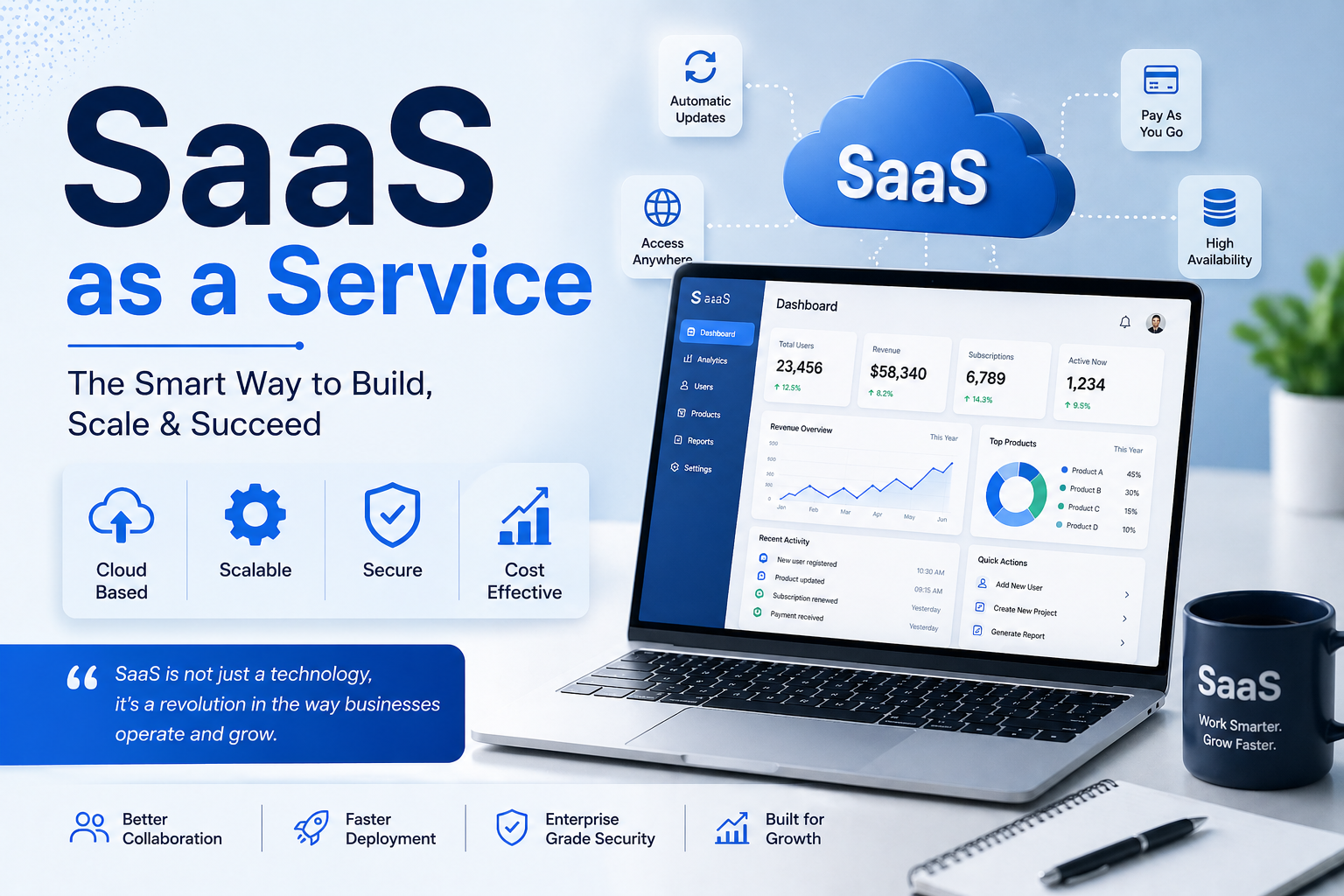
A decade ago, building a SaaS product and getting it in front of the right audience was genuinely hard. Distribution channels were limited, user acquisition was expensive, and scaling required significant headcount. Fast forward to 2026, and the playbook has completely changed. AI tools, smarter automation, and new growth models have flattened the playing field in ways nobody fully predicted.
But here is the thing: the opportunity is massive on both sides. For founders who understand the new growth levers, this is arguably the most exciting moment in SaaS history. For those still running 2020 playbooks, the gap is widening every quarter. At Inno Panda, we work with SaaS businesses across Singapore and beyond to build the digital marketing and automation strategies that compound growth — not just chase it. This guide covers everything you need to know to stay ahead.
What is SaaS? Software-as-a-Service Explained Simply
Before we get into growth strategies, let us make sure everyone is on the same page — because the term gets thrown around a lot, and it means slightly different things in different conversations.
SaaS — Software-as-a-Service — is a software delivery model where applications are hosted in the cloud and delivered to users over the internet, typically on a subscription basis. Instead of buying software once and installing it on your computer, you pay a monthly or annual fee and access the product through a browser or app — from anywhere, on any device.
The simple version: SaaS is renting software instead of buying it. The provider handles all the hosting, maintenance, security, and updates. You just log in and use it. That simplicity is why SaaS has become the dominant model for virtually every new software product built today.
The SaaS model benefits both sides: customers get lower upfront costs, automatic updates, and easy scalability; providers get predictable recurring revenue, direct customer relationships, and rich product usage data. This last point — product usage data — is one of the biggest reasons AI has transformed the SaaS landscape so dramatically in recent years.
Software-as-a-Service Examples: What Does SaaS Actually Look Like?
The best way to understand the SaaS model is to look at how deeply it has already penetrated everyday business and personal life. Here are the most recognisable software-as-a-service examples — and what they tell us about where the industry is heading.
CRM & Sales
Salesforce, HubSpot, Pipedrive — tools that manage customer relationships, pipelines, and sales workflows entirely in the cloud.
Design & Creative
Canva, Adobe Creative Cloud, Figma — professional creative tools accessible through a browser with no local installation required.
Analytics & Data
Google Analytics, Tableau, Looker — platforms that turn raw data into actionable insights, accessible to any team member with a login.
Email & Marketing
Mailchimp, Klaviyo, ActiveCampaign — marketing automation platforms that manage campaigns, audiences, and analytics in one place.
Collaboration
Slack, Notion, Asana, Monday.com — team productivity tools that replaced email threads and siloed spreadsheets for millions of teams.
Ecommerce
Shopify, WooCommerce, BigCommerce — complete online store platforms delivered as a service, powering millions of online retailers globally.
What these software-as-a-service examples share is a common growth challenge: they all need to acquire users, activate them quickly, retain them month after month, and expand revenue from existing accounts. This is the SaaS growth framework that AI is now transforming at every stage.
For businesses marketing SaaS products, tools like our lead generation funnels and conversion rate optimisation services are built precisely to solve these challenges — moving trial users to paying customers, reducing drop-off, and maximising lifetime value.
Software-as-a-Service Companies and Products: What Sets the Best Apart
There are now hundreds of thousands of software-as-a-service products on the market. But the ones that consistently grow — through market downturns, rising acquisition costs, and increasing competition — share a distinct set of characteristics. Understanding what separates elite SaaS companies from the rest is the first step in building a growth strategy that works.
SaaS Company Characteristics That Drive Sustainable Growth
The best SaaS companies in 2026 are not necessarily the ones with the most features. They are the ones that have mastered these fundamentals:
SaaS Services vs Traditional Software: The Key Differences
Understanding why SaaS services have replaced traditional software licensing for most business functions helps clarify what customers actually value — and therefore what SaaS companies need to deliver to compete.
| Factor | Traditional Software | SaaS Services |
|---|---|---|
| Delivery | Installed locally on device | Accessed via browser or app, hosted in cloud |
| Pricing | One-time licence fee, often large | Monthly or annual subscription — low entry cost |
| Updates | Manual upgrades, often paid | Continuous automatic updates included |
| Scalability | Limited by hardware and licences | Scales instantly — add or remove seats easily |
| Data Access | Stored locally, harder to access remotely | Accessible from anywhere, any device, real-time |
| Maintenance | Customer responsible for IT and upkeep | Provider handles all hosting, security, maintenance |
| Customisation | Often highly customisable but complex | Standardised with configuration options |
AI in SaaS: How Artificial Intelligence is Reshaping Every Layer of the Industry
This is the conversation that every SaaS founder, marketer, and investor is having in 2026. AI is not just a feature you can bolt onto a product — it is fundamentally changing how SaaS companies build, market, sell, and retain customers. And the companies that understand this are pulling ahead fast.
At Inno Panda, our AI automation and integration service is built precisely to help businesses — including SaaS companies — harness these capabilities without the complexity. Here is how AI is changing every layer of the SaaS stack:
AI in Product Development
AI is accelerating product development cycles dramatically. From AI-assisted code generation to automated testing and intelligent bug detection, engineering teams can ship features faster and with fewer errors than ever before. More importantly, AI is enabling SaaS products to personalise their in-app experience for each user — showing different features, tutorials, or prompts based on individual behaviour patterns. This dramatically improves activation rates and reduces time-to-value.
AI in Customer Acquisition and Marketing
The marketing side of SaaS has been transformed by AI just as dramatically as the product side. AI now powers:
For SaaS companies, this means marketing budgets go further and acquisition costs drop when AI is applied intelligently. Our Google Ads management and social media marketing services already incorporate AI-powered optimisation as standard — because it is no longer optional for competitive campaigns.
AI in Customer Success and Retention
Churn is the silent killer of SaaS businesses. A company can grow its user base every month and still shrink if churn outpaces new signups. AI is transforming customer success by predicting churn before it happens — identifying at-risk accounts based on product usage signals and triggering automated interventions before users disengage. Our CRM automation service helps SaaS companies build exactly these kinds of intelligent retention workflows.
AI in Support and Onboarding
AI-powered chatbots and virtual assistants are now handling the majority of tier-one support queries for leading SaaS companies — reducing support costs while actually improving response times. For onboarding, AI enables personalised in-app guidance that adapts to each user's role, goals, and behaviour — reducing drop-off during the critical first-session window. Our chatbot development service builds these intelligent support and onboarding experiences for businesses that want to qualify leads and retain customers around the clock.
SaaS Trends 2026: What is Shaping the Industry Right Now
Staying ahead in SaaS means staying ahead of the trends — not chasing them after they have already peaked. Here are the SaaS trends 2026 that matter most for founders and growth teams right now.
SaaS Software Going Vertical
Horizontal SaaS (products built for everyone) dominated the last decade. Vertical SaaS (products built for a specific industry — legal, healthcare, construction, hospitality) is winning in 2026. Vertical products can charge more, retain longer, and build deeper product moats because they solve industry-specific problems that generic tools cannot. If you are building or marketing a SaaS company today, niche specificity is a competitive advantage, not a limitation.
Embedded Finance and Payments in SaaS
More SaaS companies are embedding financial services — payments, lending, insurance, banking — directly into their platforms. This creates new revenue streams while increasing switching costs for customers. Shopify is the most famous example: a SaaS ecommerce platform that now generates significant revenue from its embedded payment products. This trend will accelerate sharply through 2026.
AI-Native SaaS Products
The distinction between "SaaS with AI features" and "AI-native SaaS" is becoming important. AI-native products are built from the ground up with AI at the core — the product literally cannot function without it. These products tend to have dramatically different cost structures, growth rates, and competitive dynamics. In 2026, being AI-native is becoming a baseline expectation in many categories.
Usage-Based Pricing Replacing Seat-Based Models
The traditional per-seat SaaS pricing model is giving way to usage-based pricing in many categories — especially infrastructure, AI, and API-first products. Customers pay for what they use, which lowers the entry barrier and aligns pricing with the value delivered. This is a significant commercial model shift that requires different revenue forecasting, different customer success strategies, and different funnel design.
Consolidation and the All-in-One Platform Trend
After years of best-of-breed tool proliferation, businesses are experiencing tool fatigue. In response, many SaaS companies are expanding their feature sets to become all-in-one platforms — reducing the number of integrations customers need. For smaller SaaS players, this creates both pressure (competing with platforms) and opportunity (deep integration into those platforms as partners or add-ons).
Community-Led Growth as a Competitive Moat
The most defensible SaaS businesses in 2026 are building communities — forums, Slack groups, events, certification programmes — that create value beyond the product itself. When your users are connected to each other through your platform, switching costs increase dramatically. Community-led growth is the highest-retention acquisition strategy available, and it requires deliberate investment in social media and community management.
SaaS Growth Strategies That Are Actually Working in 2026
Now for the core of this guide — the specific growth strategies that SaaS companies are using to scale in 2026. These are not theoretical frameworks. They are the approaches that the fastest-growing SaaS companies are executing right now, and they are the lens through which our team at Inno Panda approaches every SaaS marketing and growth engagement.
SEO and Content Marketing as the Primary Acquisition Engine
The SaaS companies with the lowest customer acquisition costs in 2026 are almost universally the ones that invested in content and SEO three to five years ago. Organic search is the only acquisition channel that gets cheaper over time as your content library compounds. Building topic authority through pillar content, comparison pages, use-case pages, and SEO-optimised blog content creates a traffic flywheel that paid advertising simply cannot replicate. Our SEO packages are structured specifically to build this flywheel for SaaS companies, starting with the highest-intent keywords and working outward systematically.
Product-Led Growth Combined with Sales-Assisted Expansion
Product-led growth (PLG) — where the product itself is the primary acquisition and retention driver through freemium, free trials, and in-product referrals — works best when combined with a light-touch sales motion for expansion. The pattern that works: a self-serve free tier brings users in, in-product experiences activate and retain them, and a small sales team identifies accounts showing expansion signals and converts them to higher-value plans. This hybrid model consistently outperforms pure PLG or pure sales-led approaches.
Conversion Rate Optimisation Across the Entire Funnel
Most SaaS companies focus their growth efforts on driving more traffic to their website. The smarter approach is to first fix how well existing traffic converts. Improving trial signup rates, trial-to-paid conversion, and onboarding completion rates can deliver greater revenue impact than doubling traffic — at a fraction of the cost. Our conversion rate optimisation service is built specifically for this kind of funnel-wide improvement, using user behaviour data, AB testing, and landing page optimisation to systematically move the conversion metrics that matter most.
Paid Acquisition to Accelerate What Organic Already Validates
Paid advertising should accelerate what is already working organically — not substitute for it. The best SaaS growth teams use content performance data to identify which topics and value propositions resonate, then amplify those through paid channels. Our Google Ads management team runs SaaS-specific campaign structures — including branded protection campaigns, competitor targeting, and intent-based search campaigns — that are engineered to drive trial signups and demo requests rather than just impressions.
Email and CRM Automation to Maximise Lifetime Value
For SaaS companies, email is not just a marketing channel — it is the primary way you guide users through onboarding, prompt feature discovery, prevent churn, and expand accounts. A well-structured email and CRM automation system is worth more than almost any other marketing investment. Our CRM automation service and business process automation work builds these intelligent systems — including behaviour-triggered sequences, churn prevention workflows, and expansion revenue signals — so nothing falls through the cracks.
Technical SEO and Website Performance as a Growth Lever
SaaS websites tend to be technically complex — product pages, feature pages, comparison pages, integration pages, blog content. If the technical foundation is broken, even excellent content will not rank. Our technical SEO service handles the full audit and fix cycle — site speed, crawlability, Core Web Vitals, structured data, and more — paired directly with our website speed optimisation service to ensure every page loads fast enough to convert the traffic it earns.
SaaS buyers do significant research before committing to a product — especially at higher price points. Case studies, customer logos, G2 and Capterra reviews, and ROI calculators are not nice-to-haves; they are essential conversion tools that reduce perceived risk and build trust at the decision stage. Every landing page and pricing page for a SaaS product should have strong social proof elements visible without scrolling. Our landing page design service builds this in from the ground up.
Marketing a SaaS Product: The Channels That Drive Real Results
SaaS marketing is different from product marketing in traditional industries. The sales cycle is shorter, the trial experience is often the most powerful sales tool available, and churn data is a real-time feedback loop on whether your marketing is attracting the right customers. Here is how to think about the channel mix for a SaaS company in 2026.
Organic Search and SaaS SEO
For SaaS companies, the highest-intent SEO opportunities are often comparison and alternative pages — "HubSpot vs Salesforce," "best project management software for small teams," "Asana alternatives" — because users searching these queries are actively evaluating solutions. Ranking for these terms means your product gets discovered at the exact moment someone is ready to make a decision. Our SEO services include building out these high-intent keyword strategies as a core priority.
LinkedIn is the dominant organic and paid channel for B2B SaaS companies targeting business buyers. Twitter (X) and Reddit are effective for developer-focused and technical SaaS products where the audience is highly active and community-oriented. Our social media marketing service helps SaaS companies build presence, thought leadership, and community engagement on the platforms where their buyers actually spend time.
Paid Channels for SaaS
Google Search ads targeting high-intent keywords, LinkedIn ads targeting decision-makers by role and company size, and retargeting campaigns for trial users who did not convert are the three highest-performing paid channels for most SaaS companies. Our Google Ads management team structures SaaS campaigns specifically around trial signups and demo bookings — not generic awareness metrics.
Ecommerce and SaaS: Where They Overlap
For SaaS companies selling directly online — particularly those with lower price points and self-serve onboarding — the growth mechanics are closer to ecommerce than to traditional enterprise software sales. Checkout optimisation, free trial funnel design, and cart abandonment recovery all apply. Our ecommerce automation service and Shopify development expertise is directly applicable to self-serve SaaS products in this category.
The most effective SaaS growth strategies in 2026 are not about picking one channel and going all in. They are about building an integrated system where SEO builds compounding organic traffic, paid channels accelerate acquisition, lead generation funnels convert that traffic into trials, CRM automation nurtures and retains users, and CRO squeezes the maximum value from every visitor. Every channel reinforces the others.
Frequently Asked Questions About SaaS and SaaS Growth Strategies
These are the questions we hear most often from SaaS founders and marketing teams — answered as clearly and practically as possible.
What is SaaS (Software-as-a-Service) and how does it work?
SaaS — Software-as-a-Service — is a software delivery model where applications are hosted in the cloud and delivered to users over the internet, typically via a web browser, on a subscription basis. Instead of buying software once and installing it locally, users pay a recurring fee (monthly or annual) and access the product from any device with an internet connection.
The provider handles all hosting, infrastructure, security patches, and updates. The customer simply logs in and uses the product. This model benefits both sides: customers get lower upfront costs and always-current software; providers get predictable recurring revenue and direct access to rich product usage data.
Everyday software-as-a-service examples include Slack, Salesforce, Canva, Shopify, HubSpot, Zoom, and Google Workspace — tools that billions of people use daily without thinking about the servers they run on.
What are the best SaaS growth strategies for 2026?
The most effective SaaS growth strategies for 2026 combine multiple channels and leverage AI at each stage of the funnel:
SEO and content marketing remain the highest-ROI long-term acquisition channels — building compounding organic traffic that gets cheaper over time. Our SEO packages are built around this for SaaS companies.
Product-led growth (PLG) uses the product itself as the primary acquisition driver through freemium tiers, free trials, and in-product referral loops.
Conversion rate optimisation across the entire funnel — from landing page to trial to paid — often delivers greater revenue impact than increasing traffic. Our CRO service is built for exactly this.
CRM and email automation maximise retention and expansion revenue from existing customers — the most profitable growth lever available to any SaaS business.
Paid acquisition accelerates what organic already validates, targeting high-intent keywords and decision-maker audiences with precision.
How is AI changing SaaS companies in 2026?
AI is transforming SaaS at every level — from product development to marketing, sales, support, and retention. The most significant changes include:
In product: AI enables hyper-personalised in-app experiences, intelligent feature recommendations, and predictive user behaviour modelling — dramatically improving activation and retention.
In marketing: AI powers predictive lead scoring, dynamic content personalisation, automated ad optimisation, and intent data identification — reducing customer acquisition costs and improving campaign ROI.
In support and success: AI chatbots handle the majority of tier-one support queries instantly, while churn prediction models identify at-risk accounts before they cancel. Our chatbot development and CRM automation services build these capabilities for businesses ready to invest in AI-powered retention.
In operations: AI is automating workflows across every business function — from AI integration to business process automation — giving small SaaS teams the operational leverage of a much larger organisation.
What are some well-known software-as-a-service examples?
Software-as-a-service examples span almost every category of business software today. The most recognisable include:
CRM and sales: Salesforce, HubSpot, Pipedrive — managing customer relationships and sales pipelines in the cloud.
Collaboration and productivity: Slack, Notion, Asana, Monday.com, Microsoft Teams — replacing email threads and siloed tools for millions of teams globally.
Ecommerce: Shopify, WooCommerce, BigCommerce — powering online stores for businesses of all sizes. Our Shopify development and WooCommerce development services help businesses launch and grow on these platforms.
Design and creative: Canva, Figma, Adobe Creative Cloud — professional design tools accessible through a browser.
Marketing and analytics: Mailchimp, Klaviyo, Google Analytics, Tableau — managing campaigns, audiences, and data insights without local installation.
What are the key SaaS trends to watch in 2026?
The SaaS trends shaping the industry in 2026 include:
Vertical SaaS growth: Industry-specific SaaS products are outperforming horizontal tools on retention and revenue per customer because they solve problems that generic tools cannot.
AI-native products: The distinction between "SaaS with AI features" and "AI at the core" is defining competitive dynamics in most SaaS categories.
Usage-based pricing: Pay-for-what-you-use models are replacing seat-based subscriptions across infrastructure, AI, and API-first SaaS products.
Community-led growth: Building user communities around SaaS products creates retention moats that competitors cannot easily replicate.
Consolidation into all-in-one platforms: Customers experiencing tool fatigue are gravitating toward fewer, more comprehensive platforms — reshaping competitive dynamics for both incumbents and challengers.
How do SaaS companies use digital marketing to grow?
SaaS companies use digital marketing across every stage of the funnel — from initial awareness through trial activation, paid conversion, and ongoing retention. The most effective combination in 2026 looks like this:
Top of funnel: SEO and content marketing drive organic traffic from people searching for solutions your product solves. Social media builds brand presence and thought leadership. Paid search targets high-intent keywords from users actively evaluating options.
Middle of funnel: Lead generation funnels convert visitors into trial users. Landing pages, demo booking flows, and free trial experiences are all optimised for maximum conversion through our CRO service.
Bottom of funnel and retention: CRM automation nurtures trial users toward paid conversion, triggers churn prevention workflows, and drives expansion revenue from existing accounts.
Want to build this kind of integrated SaaS growth system? Book a free consultation with the Inno Panda team.
What is the difference between SaaS software and traditional software?
The fundamental difference is in how the software is delivered and paid for. Traditional software is purchased with a one-time licence fee and installed directly onto a computer or server. The customer owns the software and is responsible for updates, maintenance, and security patches.
SaaS software is hosted in the cloud by the provider and accessed by users through a browser or app, on a recurring subscription basis. The provider manages all infrastructure, security, and updates. Customers pay only for as long as they use the product, and can typically scale usage up or down instantly.
For most business applications, SaaS has become the strongly preferred model because of its lower upfront cost, accessibility from any device, automatic updates, and the ability to start immediately without complex IT setup. This is why virtually every new software product built today is delivered as a SaaS product rather than a traditional software licence.
Building a SaaS Growth Engine That Compounds Over Time
The SaaS companies that will look back on 2026 as a breakthrough year are not the ones waiting for a single silver bullet. They are the ones systematically building the compounding growth assets that pay dividends for years — organic search authority through consistent SEO investment, customer retention through intelligent CRM automation, and conversion efficiency through ongoing CRO work.
AI accelerates every one of these compounding assets — but the underlying strategy still needs to be sound. Technology is a multiplier, not a shortcut. A well-structured SaaS growth strategy implemented with the right tools and the right team will outperform a poorly structured one no matter how much AI you layer on top of it.
At Inno Panda, we build these integrated SaaS growth systems — from the technical foundation and technical SEO through to AI-powered automation and high-converting landing pages. See how we have done it for our clients — then let us build the same kind of system for your SaaS business.
Ready to Build a SaaS Growth Strategy That Actually Scales?
Whether you are launching a new SaaS product, trying to reduce churn, improve trial-to-paid conversion, or build the content and SEO foundation that compounds for years — the Inno Panda team builds growth systems for SaaS companies that combine smart strategy with AI-powered execution. No guesswork. No vanity metrics. Just real, measurable growth.
Get a Free Consultation