EU Forces Google to Open Android to Rival AI Agents: What It Means for Businesses
- 1 EU Forces Google to Open Android to Rival AI Agents: What It Means for Businesses
- 1.1 What Did the EU Actually Order Google to Do?
- 1.2 Why Is the EU Targeting Google's Android and Search Dominance?
- 1.3 Who Wins and Who Loses From This Ruling?
- 1.4 What Changes for Android Users and Businesses in Practice?
- 1.5 What the Search Data-Sharing Rule Means for SEO and Search Visibility
- 1.6 What This Ruling Means for Businesses Using AI Tools
- 1.7 How Businesses Should Prepare for a Multi-Assistant Android Ecosystem
- 1.8 Common Misconceptions About the EU-Google AI Ruling
- 1.9 Frequently Asked Questions (FAQs)
- 1.10 Conclusion
- 1.11 Is Your AI Stack Ready for a More Open Android?
For years, Gemini has had the run of Android, deeper access, better placement, first pick of every new feature. That changed on 16 July 2026, when the European Commission ordered Google to let rival AI agents in on equal terms. Here's what actually changed, and what it means if your business runs on AI tools today.
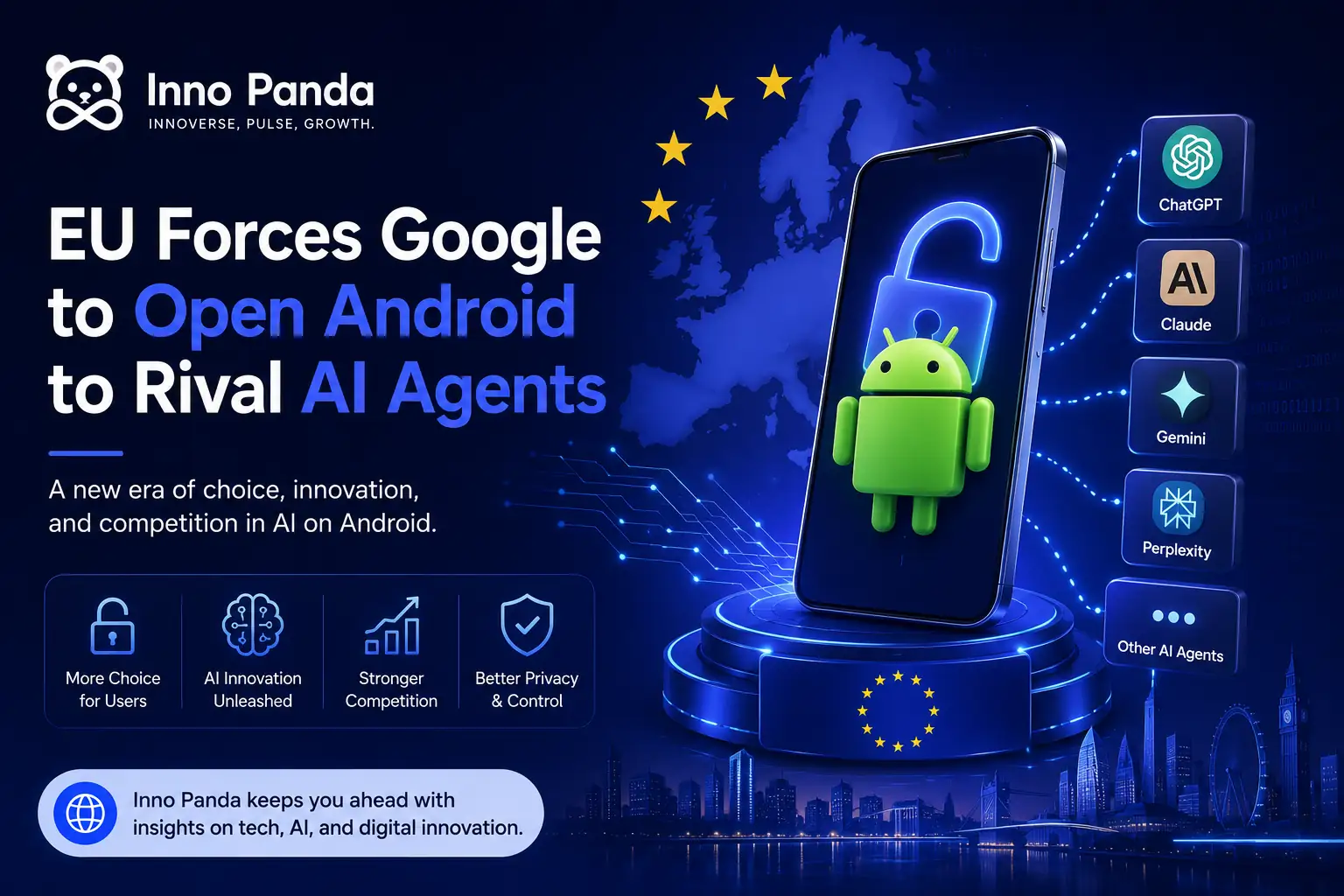
The short version: Google can no longer keep Gemini as the only AI assistant with deep access to Android. Rival AI agents from companies like Anthropic, OpenAI, and Mistral are about to get the same level of access, and that changes how AI shows up on the phone in your pocket.
This is the kind of regulatory story that sounds distant until you realize how much of your business already runs through Android, customer chatbots, mobile ordering, staff apps, automated replies. When the operating system underneath all of that opens its doors to new AI agents, the ripple effects reach further than most headlines suggest. This piece breaks down exactly what the EU ordered, why now, who stands to gain, and what businesses, including those of us here in Singapore and Southeast Asia, should actually do about it.
What Did the EU Actually Order Google to Do?
On 16 July 2026, the European Commission issued two legally binding decisions against Google under the Digital Markets Act, the EU law that places extra obligations on large "gatekeeper" platforms. Both took effect immediately, and both close out formal proceedings the Commission opened back in January 2026.
The Android AI Interoperability Order Explained
The first order requires Google to give competing AI assistants the same deep access to Android that it currently reserves for Gemini. Specifically, the Commission's order covers 11 features across four categories: invocation (how an assistant gets activated), screen context, cross-app actions, and access to on-device processing resources. In plain terms, a rival assistant should soon be able to respond to a voice command the way "Hey Google" does today, see what's on your screen when asked, and complete tasks inside other apps, like booking a restaurant, the same way Gemini can.
The Search Data-Sharing Requirement Explained
The second decision is separate but related. Google must share anonymized search data, query terms, click patterns, and ranking signals, with rival search engines and AI companies, on fair, reasonable, and non-discriminatory terms. The dataset itself is due by November 2026, with a Commission-set pricing structure due by January 2027, when the actual data sharing must begin.
Why Is the EU Targeting Google's Android and Search Dominance?
This didn't come out of nowhere. Brussels has spent the past few years steadily tightening its grip on how much control a handful of tech giants can hold over digital markets, and Google, Apple, and Meta have all felt it.
What Is the Digital Markets Act (DMA)?
The Digital Markets Act is the EU law behind all of this. It designates the largest tech platforms as "gatekeepers" and places extra obligations on them to prevent favoring their own products over competitors. Under the DMA, the Commission has already pushed Google to give rivals access to Gemini-adjacent services, forced Apple to add interoperability features for non-Apple devices, and required Meta to remove certain addictive design features. This latest Android and Search ruling is simply the next chapter in that pattern.
This Isn't Google's First EU Penalty
Two weeks before this ruling, on 2 July 2026, the EU Court of Justice upheld a separate €4.1 billion fine against Google over Android, reduced slightly from earlier figures set in 2018 and 2022. That case punished older conduct: requiring phone makers to pre-install Google Search and Chrome, paying for exclusive placement, and blocking "forked" versions of Android. It's a different case from the new interoperability rulings, but both stem from the same underlying concern, that Google's grip on Android gives it an unfair edge that's hard for any competitor to challenge on merit alone.
Timeline: How This EU-Google Ruling Unfolded
Seeing the full sequence side by side makes the story easier to follow, and shows this wasn't a sudden decision but the end point of a year-long process.
| Date | What Happened |
|---|---|
| 27 January 2026 | European Commission formally opens proceedings against Google |
| 2 July 2026 | EU Court of Justice upholds the separate €4.1 billion Android antitrust fine |
| 16 July 2026 | Commission issues both binding orders: Android AI interoperability and Search data-sharing |
| November 2026 | Google's anonymized search dataset for rivals is due |
| January 2027 | Search data-sharing with rivals must begin; pricing terms finalized |
| August 2027 | Android AI interoperability features required, phased in from Android 18 onward |
Who Wins and Who Loses From This Ruling?
Every regulatory shake-up creates winners and losers, and this one is fairly clear-cut on both sides.
AI Companies Poised to Gain Android Access
The European Commission itself noted that roughly 60% of EU adults use Android, and Gemini's automatic preloading has made rival assistants far less attractive by comparison, simply because they couldn't do as much. That's about to change. Anthropic's Claude and OpenAI's ChatGPT are the most obvious beneficiaries, both are already popular consumer assistants that could soon operate deeper Android functions directly. Mistral, the French AI lab often described as Europe's strongest frontier AI contender, is another likely winner, and one the Commission may be especially keen to see succeed given its European roots.
Google's Response and Pushback
Google isn't taking this quietly. Kent Walker, president of global affairs for Google and Alphabet, argued publicly that the ruling risks undermining privacy and security safeguards the company built to vet third-party AI assistants before granting them access. His concern, in short, is that opening features like real-time screen reading and cross-app task execution to any qualifying rival bypasses the careful vetting processes phone makers currently rely on. Google does retain the right to screen applicants for cybersecurity and data-protection compliance before granting access, but under DMA rules, filing an appeal doesn't pause the compliance clock. Google is expected to start implementing changes regardless of how any appeal plays out.
What Changes for Android Users and Businesses in Practice?
Strip away the legal language, and the practical shift comes down to three things.
| Feature Category | What Changes |
|---|---|
| Voice activation | Rival assistants can respond to their own wake word, not just Google's |
| Screen context | Rival assistants can read and act on what's currently on screen |
| Cross-app actions | Rival assistants can complete tasks inside other apps, bookings, forms, replies |
| On-device processing | Rival assistants get access to the same background resources Gemini uses |
The Compliance Timeline Businesses Should Track
Google's phased rollout means these changes won't appear overnight. Reporting on the Commission's order points to a two-stage rollout: core interoperability features arriving with Android 18 by August 2027, with hotword (voice wake-word) detection for rival assistants following in the later Android 19 phase. The search data-sharing obligation moves on its own, faster timeline through late 2026 and early 2027. For businesses planning any AI-related roadmap, these dates are worth marking, not because anything changes today, but because the assistant landscape on Android will look meaningfully different within twelve to eighteen months.
What the Search Data-Sharing Rule Means for SEO and Search Visibility
This part of the ruling gets far less attention than the Android AI story, but it may matter more for anyone running a website. Once Google starts sharing anonymized query, click, and ranking data with rival search engines, the competitive landscape for search visibility shifts too.
More Search Engines Worth Optimizing For
For years, ranking well on Google has been the whole game because no rival search engine had enough data to build a genuinely competitive ranking system. That data gap is exactly what this ruling is designed to close. If rival search engines and AI answer tools can build on a fairer slice of real search behavior, businesses may need to think about visibility across more than one search surface, not just Google's results page.
AI Answer Engines Will Get Sharper, Faster
AI-powered search and chat assistants have always been limited by how much real query and click data they could access. A wider data pool means these tools can better understand what people actually mean when they search, which raises the bar for how clearly a business needs to structure its content to be found and recommended. Businesses already investing in SEO services built around clear structure, credible content, and technical fundamentals are the ones best positioned to benefit as this plays out, since those fundamentals matter across every search surface, not just Google's.
What This Ruling Means for Businesses Using AI Tools
This is where the story stops being just tech-industry drama and starts being relevant to anyone running a business with a digital presence.
More Choice, But More Vendor Complexity
A more open Android means customers may soon reach your business through several different AI assistants instead of one default option. That's good news for choice, but it also means the assistant a customer uses to find, book, or message your business won't be uniform anymore. Businesses that built automation, chatbots, or booking flows around a single assistant's quirks may need to widen that net.
What This Means for Singapore and Southeast Asian Businesses
The legal order applies to Google's conduct in the EU, but Android is one global operating system, not a patchwork of regional versions. Changes Google makes to satisfy EU regulators have a track record of rolling out more broadly over time, and Singapore, with one of the highest Android adoption rates in Southeast Asia, is well positioned to see these interoperability features arrive not long after Europe does. For local businesses already using AI-driven chatbot development or AI automation and integration, this is a useful early signal rather than a surprise to react to later.
How Businesses Should Prepare for a Multi-Assistant Android Ecosystem
None of this calls for panic, but it's a genuinely good moment to review how your business's AI touchpoints are built.
Where This Creates Opportunity, Not Just Risk
Every time a locked ecosystem opens up, it creates room for businesses that move early. Companies that diversify their AI integrations now, rather than waiting for the compliance deadline to force the issue, will likely have a smoother transition and more negotiating leverage with whichever AI providers end up winning meaningful Android access. Our API development services team builds exactly this kind of flexible, provider-agnostic integration for clients who don't want to bet their customer experience on a single vendor's roadmap.
What Businesses Should Avoid Doing Right Now
It's just as important to know what not to do. Don't rip out a working Gemini integration before a real alternative exists, the features rivals need are still rolling out through 2027. Don't assume every AI vendor will suddenly have equal Android access on day one, certification and cybersecurity vetting still apply. And don't wait until the deadline to start planning, the businesses that struggle most with regulatory shifts like this are usually the ones that treated a 12-month runway as a same-week emergency.
Common Misconceptions About the EU-Google AI Ruling
"This Means Gemini Is Banned From Android" — Not True
The ruling doesn't remove Gemini from Android. It requires Google to give rivals equal access, not to disadvantage its own assistant. Gemini stays exactly where it is; competitors simply get a fair shot alongside it.
"This Takes Effect Immediately" — Not Quite
The decisions took legal effect immediately, but the practical rollout follows a phased timeline stretching into 2027. Businesses have real time to plan, this isn't a change that shows up on phones tomorrow.
"This Only Affects Consumers, Not Businesses" — Also Wrong
Any business using Android-based automation, customer chat, mobile ordering, staff tools, is affected indirectly the moment the assistant layer underneath those tools becomes more fragmented. It's a background shift, but a real one.
"This Affects iPhone Users Too" — Not This Ruling
This specific order targets Android, since Google controls both the operating system and Gemini. iPhone and iOS users aren't covered by these two decisions, though Apple has faced its own separate DMA interoperability requirements around connecting non-Apple devices and services. If you run an iOS app or an Apple-first customer experience, this particular ruling doesn't change your compliance picture directly.
Frequently Asked Questions (FAQs)
What did the EU order Google to do with Android?
On 16 July 2026, the European Commission issued two binding orders under the Digital Markets Act. The first requires Google to give rival AI assistants the same deep access to Android that Gemini currently has, covering voice activation, screen context, cross-app actions, and on-device processing. The second requires Google to share anonymized search data with rival search engines and AI companies.
What is the Digital Markets Act (DMA)?
The Digital Markets Act is EU legislation that places extra obligations on large "gatekeeper" tech platforms to stop them favoring their own products over rivals. Google, Apple, and Meta have all faced DMA enforcement actions requiring them to open up parts of their ecosystems to competitors.
When does Google have to comply with the Android AI ruling?
Google must build the required changes into the next major version of Android, with a compliance deadline in 2027. The search data-sharing requirement has an earlier deadline, with the dataset due by November 2026 and sharing required to begin by January 2027.
Will I be able to use ChatGPT or Claude instead of Gemini on Android?
Once Google complies, qualifying third-party AI assistants should be able to run alongside or instead of Gemini on Android, including voice activation and the ability to complete tasks inside other apps. Availability will depend on individual AI companies meeting Google's cybersecurity and data-protection certification requirements.
Does this EU ruling only apply to businesses in Europe?
The legal obligation applies to Google's conduct in the EU, but because Android is a single global operating system, changes Google makes to satisfy EU requirements often roll out more broadly. Businesses outside the EU, including in Singapore and Southeast Asia, are likely to see some of the same interoperability features over time.
Is Google appealing the EU's decision?
Google has pushed back publicly, arguing the ruling weakens privacy and security safeguards. Under DMA rules, however, filing an appeal does not automatically pause compliance obligations, so Google is expected to begin implementation while any appeal proceeds.
How does this ruling affect businesses that already use AI automation tools?
Businesses that have built workflows or customer-facing tools around a single AI assistant may need to plan for a more fragmented, multi-assistant environment on Android. It's a good moment to review integrations for flexibility rather than locking into one vendor's ecosystem.
Does this ruling affect iPhone and iOS users too?
No, not directly. These two decisions specifically target Android and Google Search, since Google controls both the operating system and its own Gemini assistant there. Apple has faced its own separate Digital Markets Act requirements around device interoperability, but the July 2026 Android and Search rulings don't apply to iOS.
What is Google's separate €4.1 billion Android fine about?
That fine, upheld by the EU Court of Justice on 2 July 2026, punishes older conduct from before 2018, when Google required manufacturers to pre-install Search and Chrome and paid for exclusive placement. It's a separate case from the new July 16 interoperability rulings, though both stem from the same regulatory push against Android's market power.
Conclusion
This ruling won't change what's on your phone tomorrow, but it marks a real shift in how much control any single company can hold over the AI layer sitting between billions of users and their apps. For businesses, the practical takeaway isn't alarm, it's flexibility. The businesses that treat their AI integrations as adaptable rather than locked to one assistant will be the ones that benefit most as this plays out over the next 12 to 18 months.
Is Your AI Stack Ready for a More Open Android?
If your automation, chatbots, or integrations are tied to a single AI assistant, now's the time to review it. We'll help you build systems flexible enough to adapt as this regulatory shift plays out.