How AI Are Changing Mobile App Development in 2026 And What It Means for Your Business
- 1 How AI Are Changing Mobile App Development in 2026 And What It Means for Your Business
- 1.1 What Are AI Agents and Why Do They Matter for AI-Powered Mobile Apps?
- 1.2 AI Mobile App Features That Are Actually Delivering Business Value in 2026
- 1.2.1 AI App Ideas for Startups in 2026: The Six Features With the Clearest ROI
- 1.2.1.1 AI Chatbot Integration and Conversational Support
- 1.2.1.2 AI-Powered Personalisation and Recommendation Engines
- 1.2.1.3 Intelligent Push Notification Systems
- 1.2.1.4 Smart Search with Natural Language Understanding
- 1.2.1.5 AI-Powered Business Intelligence Within the App
- 1.2.1.6 AI Workflow Automation Within the App
- 1.2.1 AI App Ideas for Startups in 2026: The Six Features With the Clearest ROI
- 1.3 The Future of AI in Mobile App Development: What Is Coming and Why It Matters Now
- 1.4 How to Build an AI-Powered Mobile App: The Development Process That Actually Works
- 1.4.1 How to Build an AI-Powered Mobile App: Six Stages That Prevent Expensive Mistakes
- 1.4.2 Define the AI use case before selecting the technology
- 1.4.3 Design your data infrastructure for AI from day one
- 1.4.4 Choose your AI API layer based on your specific use case
- 1.4.5 Build and test AI features in isolation before integrating
- 1.4.6 Implement proper monitoring and fallback logic
- 1.4.7 Measure AI feature impact specifically and iterate
- 1.5 Common AI Mobile App Mistakes — And How to Hire the Right Developers to Avoid Them
- 1.6 Custom CRM Software Development Singapore: Where AI Delivers the Fastest Payback
- 1.7 AI Mobile App Company Singapore: Why Businesses Choose Inno Panda for AI-Powered App Development
- 1.8 AI-Powered Applications by Industry: Real Use Cases for Southeast Asian Businesses
- 1.9 Frequently Asked Questions About AI-Powered Mobile App Development
- 1.10 The Bottom Line: AI-First Mobile App Development Is the New Standard — Not the New Premium
- 1.11 Ready to Build an AI-Powered Mobile App That Gives Your Business a Real Competitive Edge?
The mobile app you build in 2026 will be fundamentally different from the one you would have built in 2023 — not because the design conventions changed, but because AI agents have moved from an optional feature to the central nervous system of every competitive app. If you are a founder, entrepreneur, or business owner in Singapore or Southeast Asia planning a mobile app, this is the shift you cannot afford to miss.
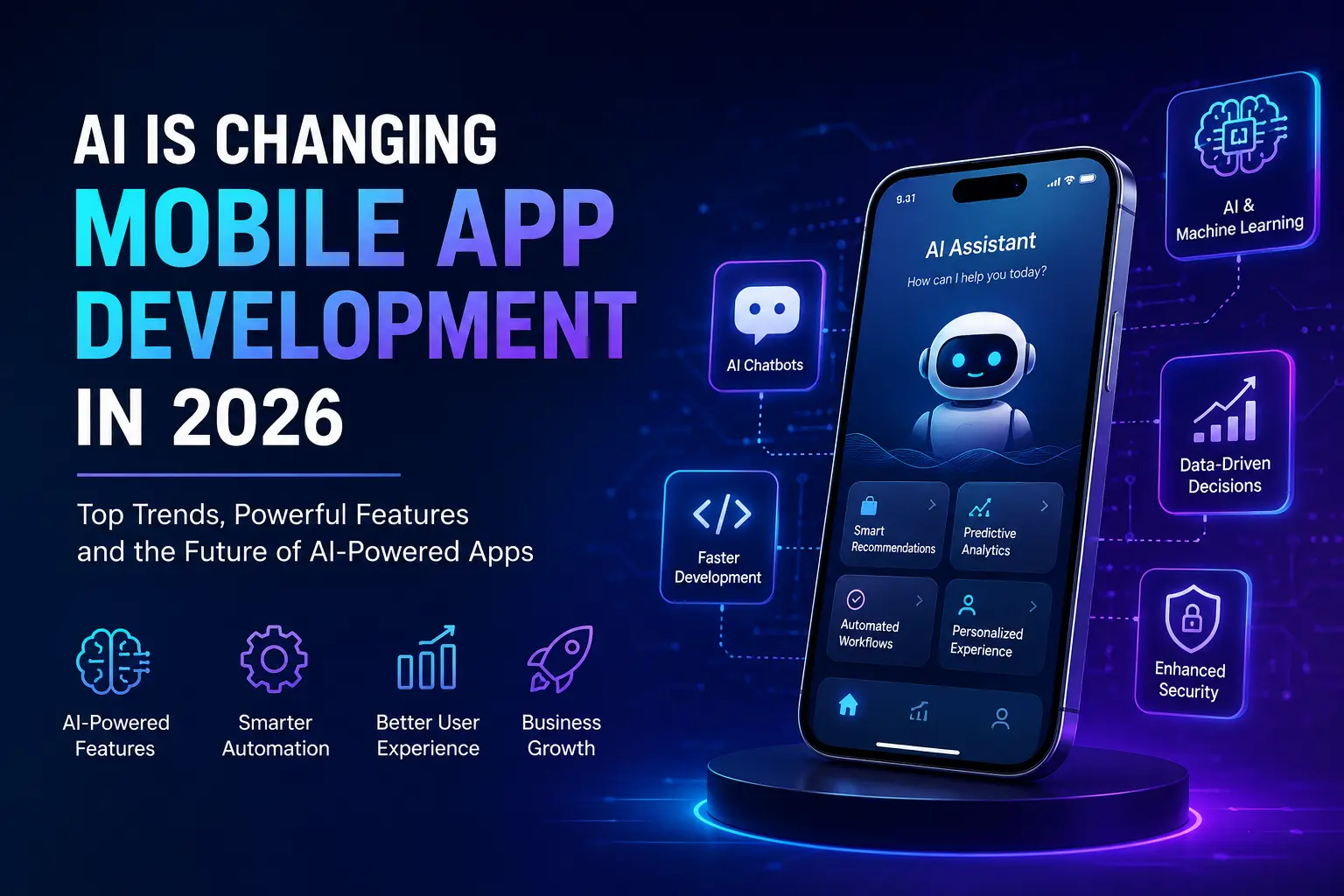
Two years ago, "AI in your app" meant adding a chatbot widget that answered three questions before routing everyone to a human. In 2026, AI agents are executing complex workflows, learning from user behaviour in real time, making decisions across multiple systems simultaneously, and doing all of it without a human touching the process at any stage. The gap between apps that integrate AI well and those that do not has become visible — and consequential.
At Inno Panda, we build AI-powered mobile apps for businesses across Singapore, Malaysia, Indonesia, and the Philippines. This guide covers the trends reshaping the industry, the AI features that deliver real business value, the cost reality for small businesses, and how to build an AI-first app without making the mistakes we see most often. Every section is grounded in what we are actually building and shipping right now.
What Are AI Agents and Why Do They Matter for AI-Powered Mobile Apps?
The term "AI agent" is everywhere in 2026 — and like most technology terms that achieve widespread usage, it has become blurry. Let us be precise about what it means in the context of mobile app development, because the distinction matters for making the right product decisions.
Mobile App Trends 2026: From AI Features to AI Agents
An AI feature is a static capability — a recommendation engine that suggests products, a classification model that sorts customer tickets, a predictive text function that completes sentences. It does one specific thing using a trained model. An AI agent is different: it is a system that perceives its environment, sets goals, takes sequences of actions across multiple systems, observes the outcomes, and adjusts its approach to achieve an objective — without requiring explicit human instructions for each step.
In a mobile app context, the difference looks like this. An AI feature says: "Based on your browsing history, here are three products you might like." An AI agent says: "You browsed running shoes three times this week but did not purchase. You have a marathon registered next month. I have found the shoes within your budget, applied your loyalty points, and pre-filled your shipping address. Confirm to order." The agent perceives context across multiple data points, sets a goal (complete a purchase the user clearly wants), takes action across multiple systems (product catalogue, loyalty programme, payment, fulfilment), and executes the outcome.
This is the shift happening in mobile app development in 2026. And for businesses in Singapore and Southeast Asia building apps, it means the architecture, the data strategy, and the feature priorities all need to be designed differently from the ground up.
AI Agents Are Goal-Directed
Unlike rule-based systems or isolated AI features, agents work toward objectives — not just triggers. They plan, execute, observe, and adapt across multiple steps and systems without requiring a human to orchestrate each action.
AI Agents Work Across Systems
A single AI agent in a business app can simultaneously read from your CRM, write to your inventory system, query a logistics API, and send a WhatsApp notification — treating them all as tools in service of one goal. This cross-system capability is what makes agents genuinely transformative for business operations.
AI Agents Improve Over Time
Because agents observe outcomes and adjust their behaviour, they improve as they accumulate data. An AI agent managing customer re-engagement gets better at predicting optimal send times, message formats, and offer amounts as it processes more interactions — making your app more effective the more it is used.
The hype trap to avoid: Not every AI feature is an agent, and not every app needs agents. For most small business apps in 2026, the right question is not "how do we build an AI agent?" but "which specific AI capability would eliminate the biggest friction point in our user experience?" The agent architecture follows from the problem, not the other way around. Our team helps businesses identify this before any development work begins.
AI Mobile App Features That Are Actually Delivering Business Value in 2026
The AI features worth building in 2026 are not the ones that look most impressive in a product demo — they are the ones that reduce a specific operational cost, increase a specific conversion metric, or improve a specific user experience in ways your analytics can confirm. Here are the six AI features we are seeing deliver the strongest measurable results for business apps in Singapore and Southeast Asia.
AI App Ideas for Startups in 2026: The Six Features With the Clearest ROI
AI Chatbot Integration and Conversational Support
Moving beyond scripted decision trees to large language model-powered conversational agents that understand intent, access real-time business data (order status, inventory, account details), and resolve queries end-to-end without human escalation. For businesses in Southeast Asia handling multilingual support — English, Bahasa, Filipino, Mandarin — LLM-powered agents handle language switching naturally in a way no rule-based chatbot can. Our AI automation service builds these integrations for mobile apps regularly — the typical outcome is 60 to 70 percent of support queries resolved without a human agent involved.
AI-Powered Personalisation and Recommendation Engines
Dynamic content, product recommendations, and app experience adaptation based on each user's individual behaviour — not demographic segments or generic bestseller rankings. The key distinction from basic personalisation: AI systems learn and improve as they process more interactions, meaning the app gets more effective over time at surfacing the right content to the right person at the right moment. For eCommerce, marketplace, and content apps in Southeast Asia, AI personalisation consistently delivers 15 to 25 percent improvements in conversion rate and session depth when properly implemented.
Intelligent Push Notification Systems
AI-driven notification timing, content generation, and audience segmentation — sending the right message to the right user at the moment when they are most likely to respond, based on their individual usage patterns rather than a scheduled broadcast. The data is consistent across markets: AI-personalised push notifications achieve 3 to 5 times higher open rates than broadcast notifications. For apps in Indonesia and the Philippines where users receive high volumes of app notifications, standing out through relevance rather than frequency is commercially critical.
Smart Search with Natural Language Understanding
Search functionality that understands intent and context rather than matching keywords — "running shoes for a half marathon under $100" finds the right products; "how do I change my delivery address" surfaces the right support article; "show me what I ordered last time from this restaurant" queries order history correctly. This is not a cosmetic upgrade — smart search directly affects conversion rate and session abandonment, particularly in commerce and service apps where users who cannot find what they need quickly simply leave.
AI-Powered Business Intelligence Within the App
For B2B and business management apps, AI-driven analytics that surfaces insights proactively — rather than requiring users to build reports manually — dramatically increases the value users get from the app. "Your inventory for SKU-1247 will run out in 6 days based on your current sales velocity" is more valuable than a dashboard the user has to query. "Your top 20% of customers account for 68% of revenue and none of them have ordered in the past 30 days" is an actionable insight that a traditional report would not surface automatically. This is one of the highest-value AI additions to any custom business software product.
AI Workflow Automation Within the App
Automating multi-step operational tasks that currently require human decision-making — not just data entry, but genuine workflow logic. An AI agent that reviews new customer applications, applies credit scoring rules, flags edge cases for human review, and auto-approves standard applications saves hours of operations team time per day. For businesses in Singapore's fintech, logistics, and professional services sectors, AI workflow automation is often the feature that transforms an app from a convenience into a core operational system.
Wondering which AI feature would deliver the most impact for your specific app idea? Our team maps your user journey, identifies the highest-friction points, and recommends the AI features that address them — before any development begins.
Get a Free AI Feature Assessment →The Future of AI in Mobile App Development: What Is Coming and Why It Matters Now
Understanding where AI in mobile apps is heading helps businesses make better architecture decisions today — because the choices you make when building your app's data infrastructure, its integration architecture, and its user experience model will either enable or constrain the AI capabilities you can add in 18 months.
AI-First Mobile App Development: The Five Trends Reshaping the Industry
Agentic Interfaces Replace Static UIs
The most significant UX shift in mobile apps is the move from navigated interfaces (users tap through menus to find functions) to conversational and agentic interfaces (users state what they want and the app's AI layer executes it). For business apps, this means AI-first app development that places a conversational agent at the centre of the user experience — with traditional UI elements as the secondary interface rather than the primary one. Early adopters in fintech, healthcare, and logistics are already building this way.
On-Device AI Reduces Latency and Privacy Risk
Increasingly, AI models are being compressed and deployed directly on mobile devices rather than in the cloud — enabling AI-powered features that work offline, respond in milliseconds, and process sensitive data without it ever leaving the device. This is particularly relevant for healthcare apps, financial services apps, and enterprise tools in Southeast Asia where data residency requirements are tightening. Our mobile app development team designs on-device vs cloud AI architecture based on each app's specific privacy and performance requirements.
Multi-Modal AI Makes Apps More Accessible
AI that understands voice, images, text, and video simultaneously is making mobile apps dramatically more accessible and capable. A field inspection app where technicians photograph equipment and AI diagnoses issues, suggests replacement parts, and logs the service record — combining image recognition, natural language generation, and backend system integration — is now buildable at SME scale. For Southeast Asian markets where voice interaction is particularly natural and prevalent, multi-modal AI opens significant product opportunities.
AI in the Development Process Itself
AI coding assistants, automated testing agents, and AI-driven design generation are reducing the time and cost of building mobile apps significantly. For small businesses in Singapore working with a development partner, this means faster delivery, lower cost, and more iteration cycles within the same budget. It also means that development partners who are not using AI tools in their workflow are delivering the same output at higher cost — a question worth asking any app developer you evaluate.
Hyper-Personalisation Becomes Table Stakes
The expectation that an app should know who you are and adapt to your specific context in real time is already present in consumer-facing apps from large platforms. It is now migrating to business apps — users expect the business tools they use every day to understand their role, their current priorities, and their workflow patterns. Apps that deliver a generic, one-size-fits-all experience will increasingly struggle to retain users who have been trained to expect better by the consumer apps they use daily.
How to Build an AI-Powered Mobile App: The Development Process That Actually Works
Building an AI-powered mobile app is not fundamentally different from building any other well-engineered app — except that decisions made early in the process (data architecture, API selection, event tracking design) have compounding consequences for how effectively AI features can be implemented and improved over time. Here is the process we follow at Inno Panda.
How to Build an AI-Powered Mobile App: Six Stages That Prevent Expensive Mistakes
Define the AI use case before selecting the technology
The most common AI mobile app mistake is choosing the technology before understanding the problem it needs to solve. "We want to add AI" is not a product requirement. "We want to reduce the time users spend searching for the right product from 90 seconds to under 20 seconds" is a product requirement — and it points toward semantic search with natural language understanding as the right AI technology. Start with the user problem. The AI approach follows from there, not the other way around.
Design your data infrastructure for AI from day one
AI features are only as good as the data they can access. An AI recommendation engine built on top of sparse, inconsistently structured product data will perform poorly no matter how sophisticated the model. Before writing any application code, define your data schema, event tracking requirements, and user behaviour logging architecture with AI feature requirements in mind. This is the part of AI app development that most developers skip — and the part that most often causes AI features to underperform in production.
Choose your AI API layer based on your specific use case
In 2026, most business app AI features are best implemented using API access to large language models (OpenAI GPT-4o, Anthropic Claude, or Google Gemini) rather than custom-trained models — because the cost of training and maintaining custom models is rarely justified for SME-scale applications. The choice between providers depends on the specific feature: conversational support and reasoning tasks favour GPT-4o or Claude; image analysis favours Google's Gemini Vision or custom computer vision APIs; real-time recommendations may use a specialised recommendation service. Our AI automation team evaluates the right API stack for each project's requirements.
Build and test AI features in isolation before integrating
AI features interact with app logic in ways that are harder to predict than deterministic code. The safest approach is to build and test each AI feature as an isolated module with clear inputs and outputs — validating its behaviour against a range of real inputs before integrating it into the app's main user flow. This is particularly important for AI features that take actions (booking, purchasing, sending notifications) rather than just displaying information — the blast radius of an incorrectly behaving AI agent is much larger than a UI bug.
Implement proper monitoring and fallback logic
AI features can fail in ways that traditional software does not — producing plausible but incorrect outputs, hallucinating information, or behaving unexpectedly on edge-case inputs. Every AI feature in a production mobile app needs proper monitoring (logging AI outputs and user responses), evaluation pipelines (periodic review of AI output quality), and graceful fallback behaviour for cases where the AI cannot produce a reliable response. This is the unglamorous part of AI app development that separates apps that work reliably in production from apps that embarrass their builders at the worst possible moments.
Measure AI feature impact specifically and iterate
AI features should be evaluated against specific, measurable business metrics — not just technical benchmarks. "The chatbot resolves 65 percent of queries without escalation" is a measurable outcome. "The recommendation engine contributes to 22 percent of revenue" is a measurable outcome. "Our AI is very advanced" is not a useful metric. Define the success metric for each AI feature before building it, instrument the measurement from day one, and iterate based on real data rather than assumptions about what is working.
Common AI Mobile App Mistakes — And How to Hire the Right Developers to Avoid Them
AI app development projects fail more often for process and architecture reasons than for technical ones. The mistakes below are the ones we encounter most frequently when businesses come to us after a failed or stalled AI app project — and the questions you should be asking any development partner to avoid them.
Hire Dedicated App Developers Singapore: What to Look for in an AI-Capable Team
Questions to Ask Before Hiring an AI Mobile App Developer in Singapore
- Can you show me a specific example of an AI feature you have built in a production mobile app — not a prototype or demo?
- How do you design event tracking and data logging to support AI features? Can you walk me through your data architecture approach?
- Which AI APIs have you integrated before? What were the specific use cases and what results did they deliver?
- How do you handle AI feature failures and fallback states in production? What monitoring do you implement as standard?
- How do you measure the business impact of AI features after launch? What metrics do you track?
- Can you advise on whether my use case requires a custom model or whether an API to a foundation model is sufficient?
- How do you handle data privacy for AI features — particularly for apps serving regulated industries or cross-border SEA markets?
Looking for a development team in Singapore with genuine AI mobile app experience? Our team can walk you through specific AI apps we have built, the architecture decisions behind them, and the measurable outcomes they delivered.
See Our Mobile App Work →Custom CRM Software Development Singapore: Where AI Delivers the Fastest Payback
For B2B businesses, the AI features with the fastest return on investment are consistently in the CRM and customer management category. An AI-powered CRM mobile app that identifies at-risk customers before they churn, surfaces cross-sell opportunities based on purchase patterns, and automates follow-up sequences based on contact behaviour can recover its development cost within six to twelve months for businesses with more than fifty active clients.
For eCommerce and retail businesses, AI recommendation engines and personalised push notifications consistently deliver the fastest measurable ROI — typically within three to six months for businesses doing more than 100 transactions per month. Our custom development service builds these features with the measurement infrastructure to prove their return from day one.
✅ Start With AI If:
- You have a clear, high-frequency user problem AI can solve
- Your app handles sufficient transaction volume to feed AI models
- The business case (cost saving or revenue uplift) justifies the build cost within 18 months
- Your development partner has demonstrable AI integration experience
- You have budget for ongoing AI API costs post-launch
- The AI feature aligns with your users' actual behaviour — not just your assumptions
⏸️ Wait on AI If:
- You have not validated your core app with real users yet
- Your data infrastructure is not ready to support AI features meaningfully
- The AI feature is a solution looking for a problem rather than vice versa
- Your development partner cannot point to specific AI apps they have shipped
- The budget for AI feature development would compromise core app quality
- Your user base is too small to generate the behavioural data AI requires
AI Mobile App Company Singapore: Why Businesses Choose Inno Panda for AI-Powered App Development
Building an AI-powered mobile app requires a development partner who understands both the mobile development craft and the specific characteristics of AI systems — data requirements, model behaviour, failure modes, and evaluation methodology. These are not the same skill set, and most development companies in Singapore are strong in one but not both.
AI Business Solutions from Inno Panda: What We Build and How
At Inno Panda, our mobile app development and AI automation capabilities are built and managed as an integrated service — because the most effective AI mobile apps are designed as unified systems, not as standard apps with AI features appended. Here is what that looks like in practice:
AI Architecture From Day One
We design data infrastructure, event tracking, and API architecture with AI features as first-class requirements — not retrofits. This is the difference between AI features that improve over time and AI features that plateau because the underlying data was never designed to feed them.
Mobile-First AI Integration
Our mobile development team builds in React Native and Flutter with AI features integrated at the component level — not as third-party widgets that feel disconnected from the app experience. Every AI interaction is designed to feel like a native part of the product.
Multi-API AI Architecture
Our API development service builds the backend integration layers that connect AI APIs (OpenAI, Gemini, Anthropic), business data systems, and mobile app frontends into unified, maintainable architectures — with proper rate limiting, fallback logic, and cost management built in.
AI Automation for Business Operations
Beyond customer-facing AI features, our AI automation service builds the workflow automation systems that connect your mobile app to your back-office operations — so AI-captured data flows automatically into your CRM, accounting, and fulfilment systems without manual re-entry.
AI Feature Measurement Infrastructure
We build analytics and measurement infrastructure that tracks the business impact of every AI feature from day one — so you can see, in your own numbers, what each AI investment is delivering. Not engagement metrics. Business outcomes.
SEA-Optimised AI Implementation
Our experience building apps for Singapore, Malaysia, Indonesia, and the Philippines means we account for multi-language AI requirements, regional payment and logistics API integration, variable connectivity environments, and the specific user behaviour patterns of each market in every AI feature we design.
We also build white-label AI-powered SaaS products that businesses can licence rather than build from scratch. Our portfolio includes Salesman AI for AI-powered sales automation, FollowUp AI for customer re-engagement, and CashFlow SaaS for intelligent financial management. For businesses where an existing AI-powered platform is 80% of what they need, starting from a licenced base dramatically reduces time to market and development cost. See our complete portfolio of AI and mobile app work.
AI-Powered Applications by Industry: Real Use Cases for Southeast Asian Businesses
AI mobile app opportunities are not equally distributed across industries — some verticals have clearer, higher-value AI use cases than others in the Southeast Asian market context. Here are the industry-specific applications we are building and seeing strong results from.
eCommerce and Retail Apps
AI recommendation engines, smart search, AI-powered customer service for pre and post-purchase queries, dynamic pricing intelligence, and personalised push notification systems. For Shopify and WooCommerce-powered businesses in Singapore, our Shopify development and AI integration capability creates AI-powered mobile commerce experiences that significantly outperform standard theme-based storefronts.
Logistics and Delivery Apps
AI route optimisation that accounts for real-time traffic, delivery time windows, vehicle capacity, and driver performance patterns. AI anomaly detection that flags unusual delivery patterns that may indicate fraud or operational issues. Predictive demand forecasting for resource allocation. For logistics businesses in Indonesia and the Philippines operating in variable-connectivity environments, AI features that function on-device or with limited connectivity are particularly relevant.
Healthcare and Wellness Apps
AI triage and symptom assessment that guides users to appropriate care pathways. AI-powered health monitoring that identifies concerning trends in user-reported data. Personalised wellness recommendations that adapt to individual health goals and behaviour patterns. For Singapore's regulated healthcare market, AI features must be designed with MAS and MOH compliance requirements built into the architecture — which our team handles as standard for healthcare app projects.
Financial Services and Fintech Apps
AI fraud detection that analyses transaction patterns in real time. AI-powered financial coaching that provides personalised saving and budgeting recommendations. Intelligent document processing for loan applications, insurance claims, and KYC verification. For Singapore's MAS-regulated fintech sector, AI feature design must account for model explainability requirements and audit trail obligations — technical requirements our team is experienced in meeting.
B2B and Enterprise Apps
Custom CRM with AI-driven lead scoring and opportunity identification. AI-powered field service apps that diagnose issues from photos and suggest resolution steps. Intelligent procurement apps that analyse supplier performance and flag risk. For B2B businesses building proprietary tools, AI workflow automation is often the feature that transforms an internal tool into a competitive differentiator — and the right custom software development partner is essential for getting this right.
Frequently Asked Questions About AI-Powered Mobile App Development
These are the questions we hear most often from founders and business owners in Singapore, Malaysia, Indonesia, and the Philippines who are evaluating AI mobile app development.
How are AI agents changing mobile app development in 2026?
AI agents are changing mobile app development in three ways: on the development side, AI tools reduce build time by 20–40%; on the product side, AI agents are becoming core features that handle support, personalisation, and workflow automation autonomously; and on the strategy side, user expectations for intelligent, adaptive app experiences have risen sharply — apps without meaningful AI are increasingly seen as baseline rather than competitive.
For startups and small businesses in Singapore and Southeast Asia, this creates a real opportunity — AI capabilities that previously required large engineering teams are now available through APIs that a well-chosen development partner can implement at SME scale. Our mobile app development service and AI automation service are built around exactly this.
What is an AI-powered mobile app and how is it different from a regular app?
An AI-powered mobile app uses machine learning models, large language models, or AI-driven automation to deliver experiences that a traditional rule-based app cannot — understanding natural language, learning from user behaviour, making predictions, and generating personalised responses in real time. The core difference is adaptability: a regular app follows fixed logic; an AI-powered app learns and improves.
For businesses in Singapore and Southeast Asia, the most immediately valuable AI features are AI chatbot integration for customer support, personalised push notifications based on individual behaviour analysis, and smart search with natural language understanding. These three features consistently deliver measurable business impact without requiring large development budgets or complex AI infrastructure. Our AI automation team can advise on which is right for your specific use case.
How much does AI-powered mobile app development cost in Singapore?
Adding AI features to a standard mobile app in Singapore typically costs SGD 8,000 to SGD 25,000 per feature (chatbot, recommendations, smart search) with a 4–10 week timeline per feature. A new app built with AI features designed in from the start costs SGD 30,000 to SGD 70,000 for a straightforward AI-integrated app and SGD 70,000 to SGD 150,000 for a mid-complexity AI-native app. Full enterprise AI-first applications cost SGD 150,000 and above.
The economics improve significantly when AI architecture is designed in from the start rather than retrofitted — which is why we include AI architecture review as a phase in every new app project. Our mobile app development team provides transparent cost estimates as part of every project scoping conversation.
What AI features should a startup mobile app include in 2026?
The AI features that deliver the most value for startup mobile apps in 2026 are: AI chatbot or conversational support (resolves 60–70% of common queries automatically), AI-personalised push notifications (3–5× higher open rates than broadcast), smart search with natural language understanding (reduces abandonment from failed search), and recommendation engines (increases session depth and conversion).
For most startups, the right approach is to start with the single AI feature that addresses your highest-friction user experience problem, prove its impact in your metrics, then build the next AI feature from there. Adding AI comprehensively before validating your core product is one of the most common and costly mistakes in app development. Our team helps startups prioritise AI features through a structured assessment before any development begins.
What is the future of AI in mobile app development?
The future of AI in mobile app development points toward agentic interfaces (conversational agents as the primary UX layer), on-device AI (reducing latency and privacy risk), multi-modal AI (understanding voice, images, and text simultaneously), and hyper-personalisation as a baseline expectation. Development-side AI tools will continue reducing build time and cost, making sophisticated AI-powered apps increasingly accessible to smaller businesses.
For startups and small businesses in Singapore and Southeast Asia, the most important near-term implication is that building an AI-first app is becoming more accessible — the barriers to AI integration are falling faster than the business need to integrate AI is growing. The window for competitive differentiation through AI-first app development is open now but will narrow as AI features become standard. Our mobile app development service is built to help businesses take advantage of this window.
How do I hire dedicated app developers in Singapore for an AI mobile app?
Hiring developers for an AI mobile app requires evaluating both mobile development capability and AI integration experience separately. Ask for specific examples of AI features they have built in production apps, their approach to data architecture for AI, their API integration experience, and how they handle AI feature monitoring and fallback. Most mobile developers can build standard apps; far fewer have real AI integration experience.
At Inno Panda, our mobile app development team works with our AI automation team on every AI app project — ensuring that mobile UX expertise and AI engineering capability are genuinely integrated rather than coordinated separately. Get in touch to discuss your specific AI app requirements, and we will walk you through specific examples of similar projects we have built.
What AI app ideas are viable for startups in Southeast Asia in 2026?
The AI app ideas with the strongest market fit in Southeast Asia in 2026 include: multilingual AI customer service platforms for SMEs, AI inventory management tools with demand forecasting, AI health triage and screening apps, AI-assisted financial management tools for personal and SME users, AI tutoring and language learning apps with adaptive difficulty, and AI logistics routing tools for last-mile delivery businesses.
The common thread is solving a high-frequency operational or consumer problem with personalised, intelligent responses that a generic SaaS tool cannot provide. Southeast Asia's markets have significant underserved demand in SME operations, healthcare access, and financial services — all areas where AI-first apps can deliver genuine differentiation. If you have a specific AI app idea, our team at Inno Panda can help you assess its viability and define the right feature set and development approach.
Can small businesses in Singapore afford AI-powered mobile app development?
Yes — and the economics have improved significantly in 2026. AI API costs have fallen substantially, making AI feature integration far more affordable than two years ago. Adding a well-executed AI chatbot integration to an existing app now costs SGD 8,000 to SGD 15,000 in development, with API usage costs starting at a few hundred SGD per month depending on query volume.
For small businesses, the most cost-effective approach is to identify the single AI feature that would deliver the most measurable business impact, build that first, and expand as the ROI justifies further investment. Our team helps small businesses make this assessment honestly — including when the right answer is that an existing SaaS tool with AI features is more practical than custom development at your current stage. Talk to our team for a transparent assessment.
The question is no longer whether to build AI into your mobile app. It is how to do it in a way that delivers measurable business value rather than impressive demos. The businesses that get this right in 2026 — the ones that identify the right AI use cases, build the right data infrastructure, choose the right APIs, and measure the right outcomes — will build mobile apps that genuinely improve with use rather than stagnating at launch quality.
For startups and small businesses in Singapore, Malaysia, Indonesia, and the Philippines, this is genuinely an opportunity rather than a burden. The AI capabilities that were previously out of reach for businesses without large engineering teams are now accessible at SME scale through the right development partner. The businesses that move now, build well, and measure rigorously will establish positions that are very difficult for later-moving competitors to overcome.
At Inno Panda, our mobile app development service and AI automation capability work together as one integrated offering — because that is the only way to build AI-powered apps that actually deliver on their promise. See what we have built, and then let us help you build the app your customers deserve.
Ready to Build an AI-Powered Mobile App That Gives Your Business a Real Competitive Edge?
Our team will assess your app idea, recommend the right AI features for your specific use case and budget, and give you a transparent development plan — with realistic cost estimates, honest timelines, and a clear ROI case for every AI feature we recommend. Whether you are building from scratch or adding AI to an existing app, we start with a free, no-obligation consultation.
No pitch decks. No generic proposals. Just a focused conversation about your specific project and what we would build for you.