10 SEO Strategies That Will Dominate Google Rankings in 2026
- 1 10 SEO Strategies That Will Dominate Google Rankings in 2026
- 1.1 1. Build Topical Authority — Not Just Individual Pages
- 1.2 2. Optimise for E-E-A-T — Google's Trust Framework
- 1.3 3. Fix Your Technical SEO Foundation First
- 1.4 4. Implement Schema Markup — Your Biggest Competitive Edge in Southeast Asia
- 1.5 5. Optimise for Google's AI Overviews — The Biggest New SEO Opportunity
- 1.6 6. Build Local SEO Signals for Singapore and Southeast Asian Markets
- 1.7 7. Measure What Matters — and Iterate Every 90 Days
- 1.8 8. Earn High-Quality Backlinks That Actually Move Rankings
- 1.9 9. Master On-Page SEO — The 2026 Standard Is Higher Than You Think
- 1.10 10. Optimise for Voice and Conversational Search — Especially in Mobile-First SEA Markets
- 1.11 Is SEO Still Worth It in 2026? What the Data Says
- 1.12 What Google Is Rewarding in 2026 — At a Glance
- 1.13 Frequently Asked Questions
- 1.14 The Bottom Line — SEO in 2026 Is About Building Trust, Not Gaming an Algorithm
- 1.15 Ready to Build SEO Rankings That Actually Last in 2026?
Your competitors are quietly outranking you — not because they have a bigger budget, but because they adapted to a Google that changed more in 18 months than in the previous five years combined. Here is exactly what is working right now for small businesses across Singapore, Malaysia, Indonesia, and the Philippines.
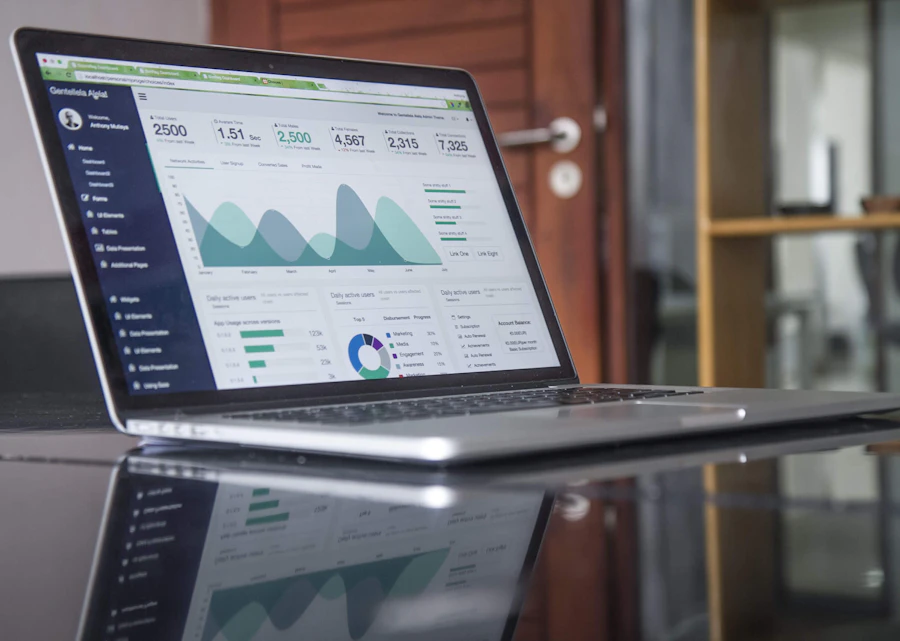
Let's cut through the noise. SEO in 2026 is not harder — it is just different. The businesses ranking on page one today are not the ones stuffing keywords or buying bulk backlinks. They are the ones Google genuinely trusts, because trust is what the algorithm has been engineered to reward.
At Inno Panda, we run SEO services for businesses across Singapore and Southeast Asia — from first-time founders chasing their first organic leads to established SMEs defending hard-won rankings in competitive markets. Every strategy in this guide is something we are actively applying for clients right now. No theory. No recycled 2022 advice. Just what works.
2. Optimise for E-E-A-T — Google's Trust Framework
If you have not heard of E-E-A-T, here is the short version: it stands for Experience, Expertise, Authoritativeness, and Trustworthiness — the four dimensions Google's quality raters use to evaluate whether a page deserves to rank. The extra "E" for Experience was added in 2022, and it fundamentally changed what kind of content Google rewards.
What E-E-A-T Means in Practice for Southeast Asian SMEs
Google is increasingly asking a simple question: "Could this content only have been written by someone with real, first-hand experience?" If the answer is no — if anyone with access to Google could have produced the same article — the page ranks poorly regardless of how well it is technically optimised.
The AI content trap in 2026: Ironically, the proliferation of AI writing tools has made genuine human expertise more valuable — not less. Google's quality filters are now highly effective at identifying AI-generated content that lacks first-hand insight or original analysis. If your content strategy depends on bulk AI articles with no specific examples or verifiable expertise, it is actively working against your rankings.
3. Fix Your Technical SEO Foundation First
Publishing great content on a technically broken website is like building a beautiful shopfront down a dead-end alley — it does not matter how good the interior looks if Google cannot find the door. Before investing a single dollar in new content or link building, you need to verify that Google can crawl, index, and correctly understand every page of your site.
The Technical SEO Issues Killing Southeast Asian Business Rankings Right Now
In our experience auditing hundreds of Singapore and Southeast Asian business websites, the same issues appear again and again — and most business owners have no idea they exist. Core Web Vitals failures are the most common, particularly slow load times on mobile. Missing schema markup, broken internal links, absent meta descriptions on interior pages, and duplicate content from URL parameters round out the top five.
Technical SEO Checklist 2026 — The Non-Negotiables
- Core Web Vitals green: Largest Contentful Paint under 2.5 seconds, Cumulative Layout Shift under 0.1
- Fully mobile-responsive with readability on screens under 400px wide
- HTTPS active across every page — zero mixed content warnings
- XML sitemap submitted to Google Search Console and kept up to date
- No crawl errors or broken internal links (verify weekly in Search Console)
- Canonical tags correct on all paginated, filtered, and duplicate URL variants
- Schema markup implemented for all relevant page types (see Strategy 4)
- All images compressed and carrying descriptive, keyword-relevant alt text
Fast win: Open Google Search Console right now and click "Core Web Vitals" under Experience. Every page marked "Poor" or "Needs Improvement" is a ranking suppressor that can be fixed. For most Singapore SME websites, addressing the top three flagged pages alone produces visible ranking improvements within 4–6 weeks.
Not sure what technical issues are suppressing your rankings? Our identifies every technical issue holding your site back — with a prioritised fix plan.
Get a Free SEO Audit →4. Implement Schema Markup — Your Biggest Competitive Edge in Southeast Asia
Here is a fact that surprises most business owners we work with: the majority of small business websites in Singapore, Malaysia, Indonesia, and the Philippines have zero schema markup. None. This is remarkable because schema markup — the structured code that tells Google exactly what your content is and makes it eligible for rich results — takes a matter of days to implement and delivers competitive advantages that persist for months.
Which Schema Types to Prioritise for Singapore and SEA Businesses
| Schema Type | Where to Use It | Key Benefit | Priority |
|---|---|---|---|
| LocalBusiness | Homepage & Contact page | Local Pack & Knowledge Panel eligibility | Critical |
| FAQPage | All pages with Q&A sections | FAQ rich results + AI Overview citations | Critical |
| Service | Every service page | Enhanced service listings in SERPs | High |
| Article | All blog posts | E-E-A-T signals & Top Stories eligibility | High |
| BreadcrumbList | All interior pages | Breadcrumb path shown in SERPs | Medium |
| AggregateRating | Service pages with genuine reviews | Star ratings displayed in results | Medium |
WordPress users: The Yoast SEO plugin handles LocalBusiness, Article, and BreadcrumbList schema automatically once configured. For FAQPage schema on individual posts, use the Yoast FAQ block or the Schema Pro plugin. Always validate your output at search.google.com/test/rich-results before considering implementation complete.
5. Optimise for Google's AI Overviews — The Biggest New SEO Opportunity
Google's AI Overviews — the AI-generated answer boxes appearing at the top of search results — are the most significant change to search visibility in a decade. Most businesses are treating them as a threat. Smart businesses are treating them as the opportunity they actually are.
Being cited as a source in an AI Overview generates brand exposure even when users do not click through. And here is the critical insight: pages that appear in AI Overviews also tend to rank in positions 1–5 in traditional results. AI citation and traditional ranking reinforce each other — they are not competing objectives.
The Exact Content Structure That Gets Featured in AI Overviews
Answer Specificity
Provide a direct answer to a specific question within the first 40–60 words of every section. Google's AI pulls answers from content that leads with clarity — not content that buries the answer after three paragraphs of context.
AI Overviews only cite sources Google already considers authoritative. Your page needs backlinks from credible domains, FAQPage schema, and identifiable author credentials before it can appear. Authority first, optimisation second.
Content Structure
Use H2/H3 headings that mirror exact question phrasing. Implement FAQPage schema on every page with a Q&A section. Write in plain, factual language — never promotional. Pages that reach the point fast get cited far more often.
Quick win you can do today: Open your five highest-traffic pages. Add a dedicated FAQ section to each with 3–5 questions mirroring the People Also Ask results for that page's target keyword. Add FAQPage schema. This single action, applied consistently across your site, is the fastest path to AI Overview citations for most Singapore and SEA SMEs.
6. Build Local SEO Signals for Singapore and Southeast Asian Markets
If you are serving customers in a specific city or region — Singapore, Kuala Lumpur, Jakarta, Manila — local SEO is a distinct discipline with its own signals, its own tools, and its own competitive landscape. And in most Southeast Asian markets, it remains shockingly underutilised.
Google Business Profile — Your Most Valuable Local SEO Asset
A fully optimised Google Business Profile is the single most impactful thing a Singapore or Southeast Asian small business can do for local search visibility. The businesses appearing in the local pack — the map section at the top of geo-specific searches — are almost entirely determined by GBP quality, proximity, and review volume. If your GBP has not been updated in the last 90 days, your local ranking signals are actively degrading.
✅ The SEA Local SEO Opportunity
- Most local competitors lack schema markup — fast competitive win
- GBP profiles are incomplete for the majority of SEA SMEs
- Citation consistency issues are widespread — easy fixes that move rankings
- Mobile performance gaps are common — speed stands out immediately
- E-E-A-T signals are rare locally — adds instant differentiation
- English-language content depth is low — comprehensive pages rank fast
🎯 SEA-Specific Local Priorities
- Geo-specific keywords: include "Singapore," "KL," "Jakarta," "Manila" naturally
- Multi-language considerations for Bahasa Indonesia and Filipino markets
- Mobile-first is non-negotiable — mobile dominates all SEA search volume
- Singapore certifications and industry associations carry strong E-E-A-T weight
- Regional media coverage (CNA, The Business Times) delivers authority backlinks
- Name, Address, Phone must be identical across all directories — no variations
7. Measure What Matters — and Iterate Every 90 Days
The most technically perfect SEO strategy in the world delivers zero value if it is implemented once and forgotten. SEO is a compounding investment, not a one-time project — and the businesses that build sustainable organic growth are the ones treating it like a quarterly operating discipline, not an annual campaign.
The Three Metrics That Actually Matter for SEO ROI
Board members and business owners often struggle to connect SEO activity to business outcomes. Here is the framework that makes that conversation simple.
Traffic Value
Multiply your monthly organic sessions by the average CPC for your keywords in Google Ads. This shows the paid equivalent value of your organic traffic — typically 3–10× your SEO investment. It instantly reframes SEO from a cost to a media asset.
Lead Attribution
In Google Analytics 4, set up a conversion event for contact form submissions and phone clicks. Filter by organic source/medium. Multiply monthly organic conversions by your average deal value to calculate pipeline generated from organic search.
Ranking Momentum
Show keyword position improvements in 90-day windows, not monthly snapshots. Rankings are a compounding asset — positions gained today generate traffic for months. A 12-month projection beats a 30-day snapshot in every board conversation.
The Measurement Cadence That Works
Monthly: review Search Console for pages with high impressions but low CTR — these are title and meta description optimisation opportunities. Quarterly: update any pages with outdated information or declining rankings, and check for new technical issues. Biannually: full technical audit for crawl, speed, and schema issues that have crept in over time.
The honest truth about timelines: Technical fixes can show results in 4–6 weeks. Content improvements on indexed pages often move rankings in 6–8 weeks. Meaningful overall ranking growth for most Singapore SMEs targeting local keywords is visible within 4–6 months of consistent, well-executed work. The key word is consistent.
8. Earn High-Quality Backlinks That Actually Move Rankings
Backlinks are still one of Google's most powerful ranking signals — but the way they work has changed substantially. Back in 2019, volume was a reasonable proxy for quality. Today it is not. One solid backlink from a respected Singapore technology publication is worth more than 200 links from generic directories or blog networks. Google's spam systems have become accurate enough to not just ignore bad links, but to actively penalise sites whose link profiles look manufactured.
We have seen this firsthand. A client in the HR tech space in Singapore had built up hundreds of links through a link-building agency — directory submissions, guest posts on unrelated blogs, private networks. Rankings were flat for 18 months despite significant investment. When we cleaned the link profile and replaced those links with five solid placements from industry publications, rankings moved within eight weeks. Quality is not just better than quantity. It is faster.
The Backlink Strategies That Actually Work for Singapore and SEA Businesses in 2026
The best backlinks come from places where your business genuinely belongs. That sounds obvious, but most link-building programmes ignore it completely. Start with the directories and associations that are specific to your industry and geography — Clutch and GoodFirms for tech and services businesses, SPRING Singapore-affiliated directories, your industry's professional association site, and local media properties. These are credible, relevant, and available to any legitimate business.
What not to do in 2026 — and what will get you penalised: Buying links from link farms, participating in link exchanges at scale, using automated submission tools, placing keyword-rich anchor text on irrelevant websites, or working with agencies that cannot name the specific publications they will place you in. Google detects all of these patterns. We have spent time cleaning up the damage from bad link-building agencies for multiple clients — it is a slow and painful process. Do not put yourself in that position.
Want a link-building strategy built around legitimate, high-authority placements? Oura> includes off-page authority building through credible, relevant sources specific to your industry.
Talk to Our Team →9. Master On-Page SEO — The 2026 Standard Is Higher Than You Think
On-page SEO is the part of the job most people think they have already done. Meta title: check. H1: check. A few keywords scattered through the body text: check. And then they wonder why the page sits on page three and does not move.
The standard in 2026 is genuinely higher. Google has become sophisticated enough to evaluate whether a page actually serves the searcher's intent — not just whether it contains the right words. That means the question is no longer "did I include the keyword?" It is "does this page give someone searching that keyword everything they actually needed, in the clearest possible way?" Those are very different questions, and most small business websites are only answering the first one.
On-Page SEO Elements That Are Non-Negotiable in 2026
Meta Titles and Descriptions — Write for Humans, Not Just Crawlers
Your meta title is your search result headline. It needs to be under 60 characters, include the primary keyword near the start, and give a reason to click — not just a label. "SEO Services Singapore" is a label. "SEO Services in Singapore That Actually Move Rankings | Inno Panda" is a headline. The meta description (under 155 characters) should answer the searcher's implicit question before they click — which dramatically improves CTR, which is itself a ranking signal.
Heading Structure — Your H2s and H3s Are Doing Heavy SEO Lifting
Every H2 and H3 heading on your page is an opportunity to capture a secondary search query. If your service page has subheadings like "Our Approach" and "Why Choose Us," those headings are doing nothing for SEO. If they say "How Long Does Custom Software Development Take in Singapore?" and "What Does API Integration Cost for a Small Business?" — now you are capturing the questions your customers are actually typing into Google. Map your H2s and H3s to real search queries, not internal section labels.
Internal Linking — The Ranking Signal Most Businesses Completely Ignore
Every internal link you add is a vote of confidence that passes authority from one page to another. If your most authoritative page — say, your homepage or a high-traffic blog post — has no links to your key service pages, that authority sits stranded and does nothing for the pages you most want to rank. Build a deliberate internal linking structure where every piece of content links to at least two related pages using descriptive anchor text. Not "click here." Not "learn more." "Custom software development cost in Singapore" — the actual topic of the destination page.
Quick on-page audit you can run right now: Pick your most important service page. Open it on mobile. Count how many times the page actually answers a specific question a potential customer would have. Count how many internal links are on the page. Count how many H2 and H3 subheadings mirror real search queries. If the answers are "not many," "one or two," and "none" — that page has significant untapped on-page SEO potential and it is not going to rank as high as it should.
10. Optimise for Voice and Conversational Search — Especially in Mobile-First SEA Markets
If you have not looked at your search query data in Google Search Console recently, go and do it. Filter for queries over eight words long. For most Singapore and Southeast Asian business websites, the proportion of long-form, conversational queries has been growing quietly for the past two years — and it accelerated significantly with the adoption of voice search on mobile devices.
Voice search is not a future trend in Southeast Asia. It is the present reality, particularly in Indonesia and the Philippines where typing on small screens in a second language is friction that voice removes entirely. And voice queries are structurally different from typed queries in ways that directly affect how you need to structure your content.
How Voice Search Queries Differ — and Why It Changes Your Content Strategy
A person typing into Google might search "accounting firm Singapore SME." The same person using voice search says "what is the best accounting firm for small businesses in Singapore?" Those are two different content targets. The first is a keyword. The second is a question — and it is the question format that voice results almost always draw from.
The good news is that optimising for voice search and optimising for AI Overviews and optimising for People Also Ask boxes all point in exactly the same direction: structured, question-and-answer content that leads with a direct, specific answer and supports it with context. You are not building a separate voice search strategy. You are building better content that serves multiple formats simultaneously.
Structure Content as Questions
Write H2 and H3 headings as the exact questions your audience asks out loud. "How much does a custom website cost in Singapore?" outperforms "Website Pricing" for voice search every time. The question format is what voice assistants pull from.
Page Speed Is Non-Negotiable
Google applies the same Core Web Vitals thresholds to voice result selection as to traditional rankings. If your page loads in over three seconds on mobile, it is not eligible for voice results regardless of content quality. Mobile speed and voice optimisation are the same problem.
Answer in Plain Language
Voice assistants read answers aloud. If your answer sounds unnatural when spoken — full of technical jargon, passive constructions, or corporate-speak — it will not be selected. Write the way a knowledgeable person explains something to a colleague. Conversational, precise, no unnecessary complexity.
The compound benefit of getting this right: Every page you optimise for voice search — question-based headings, direct answers under 60 words, FAQPage schema, fast mobile load — also becomes eligible for People Also Ask boxes, AI Overview citations, and featured snippets. You are not optimising for one format. You are building a page that performs across all the high-visibility SERP features simultaneously. For a small business in Singapore competing against larger, slower-moving competitors, this is exactly the kind of advantage that compounds over time.
Want all 10 of these strategies applied to your actual website — not as a template, but as a specific action plan? We have done this for businesses across Singapore, Malaysia, Indonesia, and the Philippines.
Get Your Free SEO Audit →Is SEO Still Worth It in 2026? What the Data Says
Every time Google makes a major change, the same question surfaces. The answer in 2026 is an unambiguous yes — but the how matters as much as the whether.
Organic search still drives 53% of all website traffic. Google commands 91%+ of global search share. AI Overviews appear for roughly 15% of queries — meaning 85% of searches still serve traditional results. And the pages that rank in positions 1–5 are also the most frequently cited in AI Overviews. Traditional ranking and AI visibility are not in competition. They compound together.
The bottom line: SEO ROI has not disappeared — it has concentrated. Businesses with genuine topical authority, strong E-E-A-T signals, and well-structured content are capturing a larger share of a high-value channel. Businesses with shallow, generic content are being displaced. The gap between the two groups is widening in 2026. The question is not whether to do SEO — it is whether your SEO is good enough to be on the winning side.
What Google Is Rewarding in 2026 — At a Glance
Technical Signals
Content Signals
Authority Signals
Frequently Asked Questions
What are the best SEO strategies for small businesses in 2026?
The highest-leverage strategies for small businesses in 2026 are: building topical authority through content clusters, implementing schema markup (most local competitors have not done this), fixing Core Web Vitals and technical issues, and optimising content to appear in Google's AI Overviews. For Singapore and Southeast Asian businesses specifically, a fully optimised Google Business Profile and local citation consistency also deliver fast, measurable results.
How do I get featured in Google AI Overviews?
Structure your content so every section answers a specific question within the first 40–60 words. Use H2/H3 headings that mirror the exact phrasing of the question. Implement FAQPage schema markup. Build source authority through backlinks from credible domains and identifiable author credentials. AI Overviews only cite sources Google already trusts — build the authority foundation first, then optimise the content structure.
How long does SEO take to show results in 2026?
Technical fixes and schema implementation can show results within 4–6 weeks. Content improvements on existing indexed pages often produce ranking movement within 6–8 weeks. For new content targeting competitive keywords, expect 3–6 months. For most Singapore SMEs targeting local or niche keywords, meaningful ranking improvements are visible within 4–6 months of consistent, well-executed work.
Is SEO worth it in 2026 with AI changing search?
Yes, unambiguously. Organic search still drives 53% of all website traffic. AI Overviews currently appear for roughly 15% of queries — 85% of searches still deliver traditional results. Pages that rank highly in traditional results are also the most frequently cited in AI Overviews, so good SEO serves both channels simultaneously. The right response to AI search is not to stop doing SEO — it is to do it correctly for the AI environment.
What technical SEO issues most commonly affect Singapore business websites?
In our experience auditing Singapore and Southeast Asian business websites, the most common issues are: slow mobile load times failing Core Web Vitals thresholds, missing schema markup across the entire site, absent or duplicate meta descriptions on interior pages, broken internal links, and thin service page content that does not match the depth of what Google rewards. Most sites have 5–12 issues that are actively suppressing rankings and that can be fixed within 2–4 weeks.
The Bottom Line — SEO in 2026 Is About Building Trust, Not Gaming an Algorithm
The businesses dominating Google rankings in 2026 are not the ones who found a clever loophole. They are the ones Google genuinely trusts — because trust is built through demonstrated expertise, verified credentials, technical excellence, and consistent content investment over time.
None of this is mysterious. It is methodical, well-executed work applied consistently over months. The businesses that start now — fixing their technical foundation, building content clusters, earning authority signals, mastering on-page fundamentals, and structuring content for AI Overviews and voice search — are building ranking positions that will compound in value for years.
The businesses that wait are not just falling behind. They are making it progressively harder and more expensive to catch up — because the competitors ahead of them are getting stronger every single month.
Ready to Build SEO Rankings That Actually Last in 2026?
Our team will audit your current website, identify the specific technical, content, and authority issues holding back your rankings, and give you a clear, prioritised action plan — whether you want to implement it yourself or have us run the full programme. No jargon. No guaranteed-ranking promises. Just honest analysis and practical execution from a team that does this for Singapore and Southeast Asian businesses every day.