China’s Home-Cleaning Robot Services Are Going Global
- 1 China’s Home-Cleaning Robot Services Are Going Global
- 1.1 The Shift from Product to Service
- 1.2 How AI Powers Modern Cleaning Robots
- 1.3 Global Market Growth and Opportunity
- 1.4 Impact on Businesses and Industries
- 1.5 Comparison with Other Markets
- 1.6 Challenges and Concerns
- 1.7 The Future of Smart Homes
- 1.8 Final Thoughts
- 1.9 Frequently Asked Questions
China’s home-cleaning robot services are rapidly gaining international attention, combining artificial intelligence, robotics, and subscription-based models to redefine how households and businesses approach cleaning.
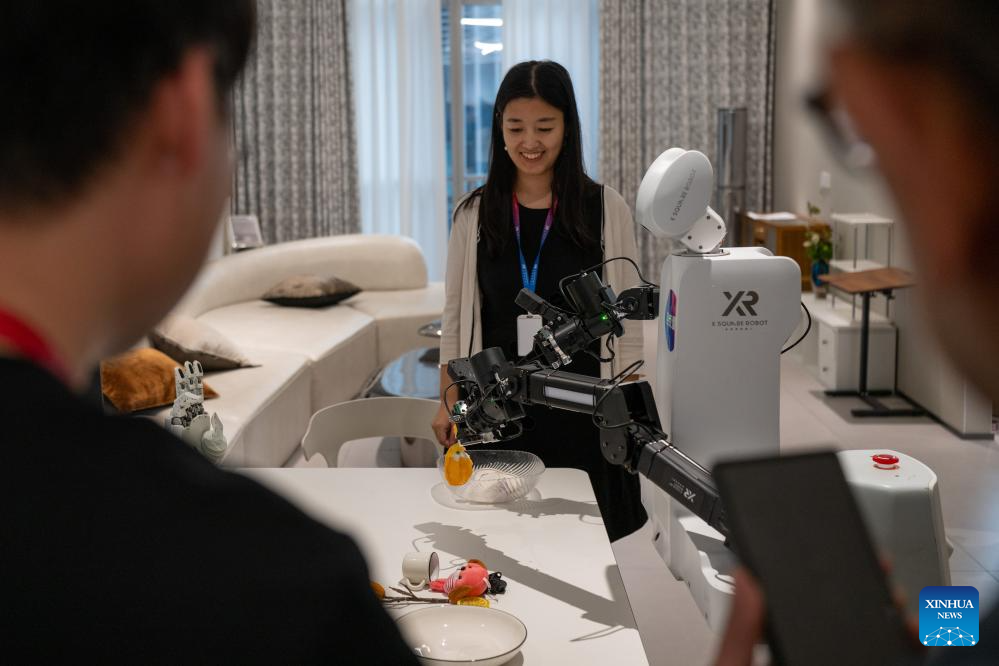
According to reporting from Xinhua News, China’s home-cleaning robot services are beginning to capture global attention as demand for smart home automation continues to rise.
What makes this trend particularly significant is not just the robots themselves, but the shift toward service-based robotics. Instead of purchasing a device outright, users can subscribe to a cleaning solution that includes maintenance, upgrades, and ongoing support.
The Shift from Product to Service
This move reflects a broader transformation happening across technology industries. Just as software transitioned into SaaS, robotics is now evolving into what many are calling “Robotics as a Service.”
This model lowers the barrier to entry for consumers while creating recurring revenue streams for companies. It also ensures that users always have access to the latest technology without needing to replace hardware frequently.
Why this matters
The combination of AI, robotics, and subscription models is creating a powerful new category that could reshape household services globally.
How AI Powers Modern Cleaning Robots
Today’s cleaning robots are far more advanced than early robotic vacuums. They rely on artificial intelligence technologies such as computer vision, machine learning, and real-time mapping.
These systems can identify obstacles, learn room layouts, optimise cleaning paths, and adapt to different surfaces. Over time, they become more efficient as they gather more data from their environment.
This aligns closely with broader trends in AI automation and integration, where intelligent systems are being embedded into everyday processes to improve efficiency and reduce manual effort.
Global Market Growth and Opportunity
The robotics market is expanding rapidly worldwide. According to industry data from Statista, demand for consumer robotics and smart home devices continues to grow as technology becomes more affordable and accessible.
China’s strength in manufacturing and AI development gives it a significant advantage in scaling production and exporting these solutions globally.
Countries like the United States and Japan have long been leaders in robotics, but China’s combination of cost efficiency and rapid innovation is allowing it to compete aggressively in international markets.
Impact on Businesses and Industries
The implications extend far beyond households. Industries such as hospitality, real estate, healthcare, and facilities management can all benefit from automated cleaning solutions.
Hotels, for example, can deploy robots to clean rooms more efficiently, while office spaces can maintain hygiene standards with minimal human intervention.
Businesses looking to digitise operations are also exploring complementary technologies such as chatbot development to automate customer interactions alongside physical automation.
Comparison with Other Markets
While countries like Japan have historically led in robotics innovation, China’s approach focuses heavily on scalability and cost reduction. This makes adoption more feasible for mass markets.
In contrast, Western markets often focus on premium devices with higher price points. China’s model may disrupt this by offering affordable, service-based alternatives that appeal to a broader audience.
Challenges and Concerns
Despite the rapid growth, several challenges remain. Cost is still a factor for many consumers, and reliability continues to improve but is not perfect.
There are also concerns about job displacement, as automation could reduce demand for traditional cleaning services.
Additionally, privacy is an important issue. Robots equipped with cameras and sensors collect data about home environments, which must be handled securely.
The Future of Smart Homes
Cleaning robots are just one piece of a much larger smart home ecosystem. In the future, homes may include multiple interconnected devices that handle cleaning, security, maintenance, and even personal assistance.
As AI continues to evolve, these systems will become more intuitive, capable of understanding user preferences and automating tasks seamlessly.
This creates opportunities for businesses to innovate and build new services around connected home environments.
Final Thoughts
China’s home-cleaning robot services represent a significant step forward in the integration of AI and robotics into daily life. The shift toward service-based models, combined with rapid technological advancements, is making automation more accessible than ever before.
For businesses and consumers alike, the key is to understand how these technologies can be used effectively. Those who embrace automation early will be better positioned to benefit from the efficiencies and opportunities it brings.
Frequently Asked Questions
What is a cleaning robot service?
A subscription-based service where robots are used to clean homes instead of manual labour.
Why is China leading this trend?
Due to strong manufacturing capabilities and rapid AI innovation.
Are these robots replacing jobs?
They may reduce some roles but are more likely to complement human workers.
Is this technology safe?
Yes, but users should ensure proper data security and privacy measures are in place.